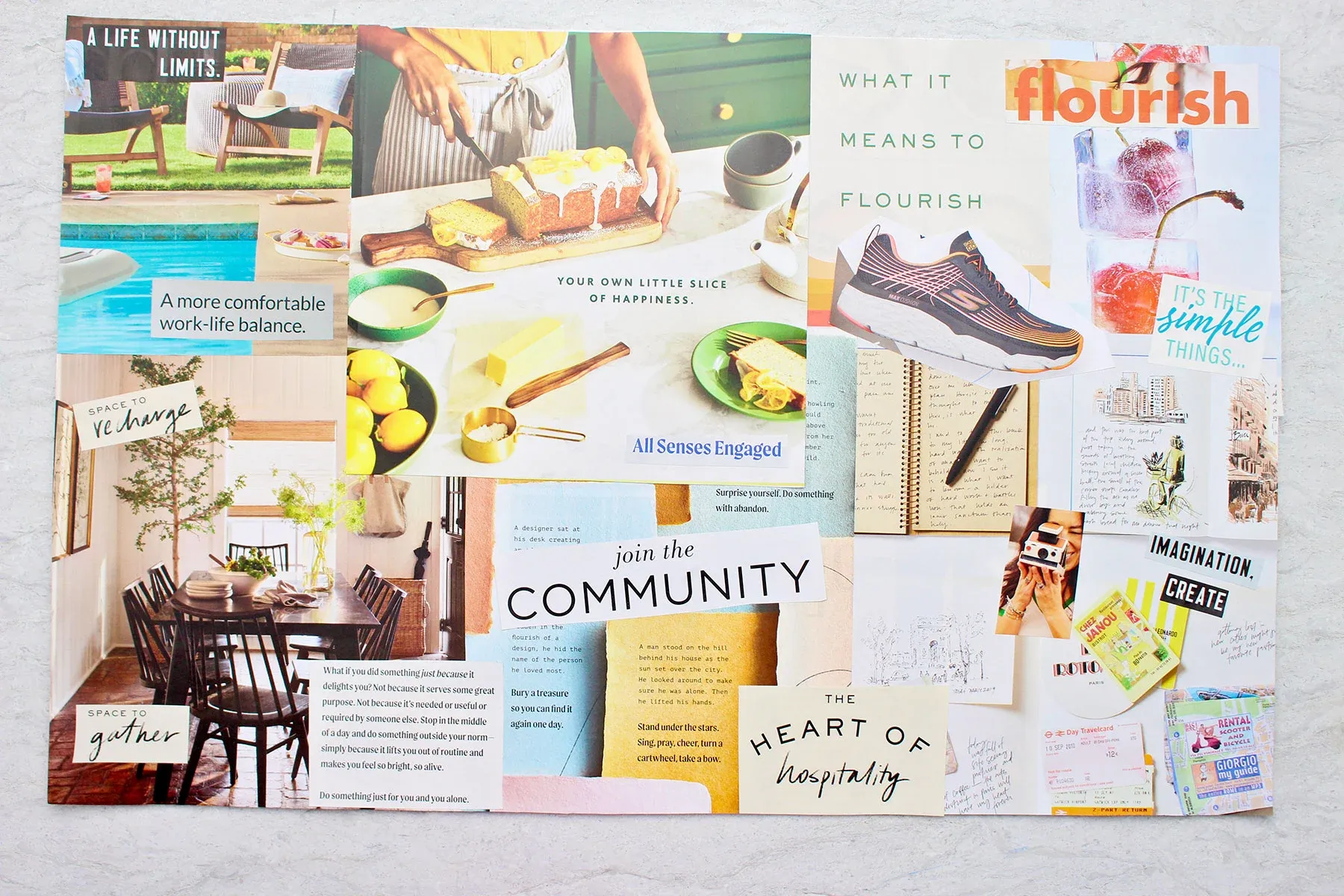
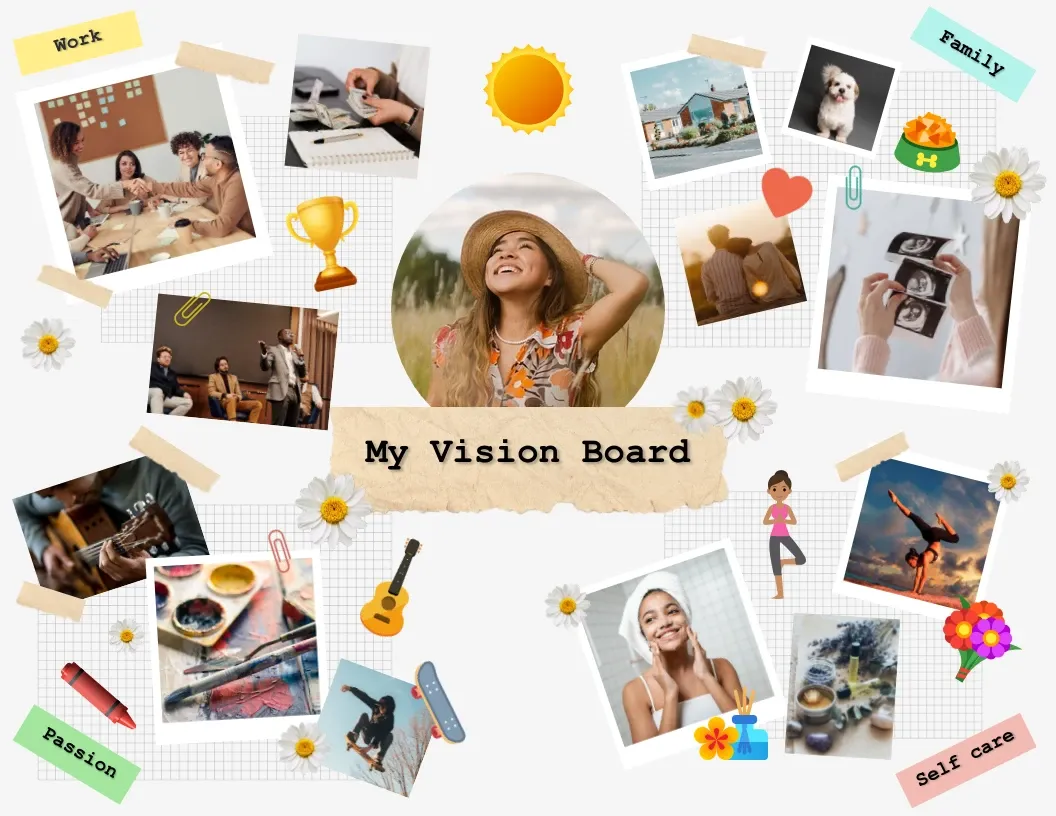
Example of a Dream Board
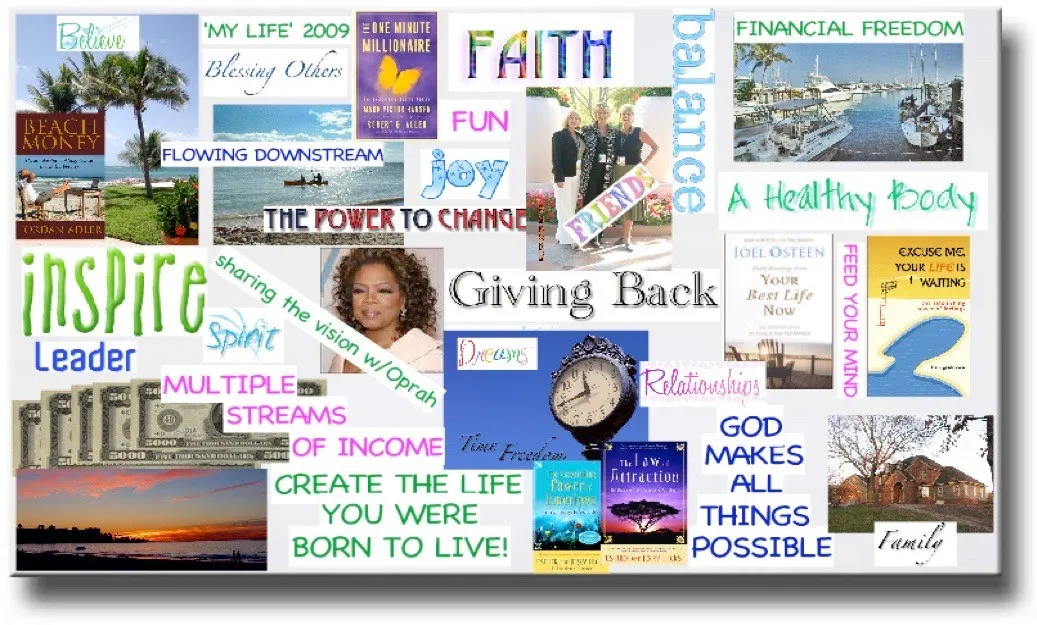
A dream board is a visual collection of images, words, and symbols that represent the life you want to create, displayed on a physical or digital space you see regularly. The most effective dream boards combine specific goals with inspiring imagery that speaks to your values and aspirations, creating a daily reminder of what matters most to you.
What a Dream Board Actually Is
A dream board isn't a vision board in the Pinterest sense—though Pinterest can help you gather ideas. It's a personal tool that sits somewhere between intention-setting and visual journaling. Think of it as your own custom gallery of possibility.
The core idea is simple: when you see images and words that represent your desired future regularly, you begin to notice opportunities and make choices aligned with that vision. You become more aware of doors that match where you're headed.
Unlike a to-do list, a dream board isn't about urgency. It's slower, more reflective. It works with the part of your mind that notices patterns and possibilities over time.
Creating Your First Dream Board: The Basic Process
You don't need supplies beyond what you likely have at home. Many people overthink the materials and never start. The simplest version takes about an hour.
What you'll need:
- A base (poster board, canvas, cork board, or even a dedicated folder on your laptop)
- Images from magazines, printed from the web, or hand-drawn
- Words or phrases that resonate (cut from magazines or handwritten)
- Adhesive (tape, glue stick, or pins)
The basic steps:
- Spend 15-20 minutes browsing magazines or images online. Don't overthink it—grab anything that makes you feel something or represents an area of life you want to develop.
- Gather your words. These might be affirmations, goals, values, or single powerful words. "Growth." "Calm." "Connection." Keep them simple.
- Arrange everything on your base without committing yet. Move things around. Notice what feels balanced and true to you.
- Secure everything. Take a photo before you glue, in case you want to adjust later.
- Place it where you'll actually see it—your bedroom, office, or bathroom mirror.
That's it. You don't need it to be beautiful or perfectly curated on the first try.
Key Elements to Include on Your Dream Board
The most functional dream boards combine a few types of content. This mix keeps them grounded and actionable rather than purely aspirational.
Visual anchors: Images that make you feel the way you want to feel. For many people this isn't a picture of a house or car—it's a landscape that feels peaceful, or someone in a yoga pose, or an image of ocean waves. Choose images that trigger an emotional response, not just intellectual acknowledgment.
Specific goals: At least some concrete targets. "Marathon in 2026," "Learn Spanish," "Launch side project." These ground your dream board in real intention. You don't want the entire board to be abstract feelings.
Values words: Three to five core words that reflect how you want to show up. "Brave," "Generous," "Creative," "Present." These act as decision-making filters when you're unsure about choices.
Identity statements: Who do you want to become, not what do you want to have? "Someone who moves her body daily," "A confident speaker," "A devoted parent." These are subtly different from goals and often more motivating.
Small symbolic items: Some people include actual objects—a bit of ribbon, a postage stamp, a quote card. If it fits your style, it can add texture and personal meaning.
Examples of Different Dream Board Approaches
There's no single right format. Here are three functional approaches:
The Organized Grid: Divided into life categories (health, relationships, work, creative, finances, personal growth). Each quadrant has images and words for that area. This works well if you want a comprehensive life snapshot and you like structure.
The Intuitive Flow: No sections, no organization system—just images and words arranged in a way that feels balanced to your eye. Some people respond better to this organic approach. It often ends up more beautiful and less rigid.
The Minimal Focus: One or two large central images with supporting words scattered around. Perfect if you have a primary focus (launching a business, deepening your spiritual practice) and want everything to orbit that center.
The Digital Version: A private Pinterest board, a Google Photos album, or a simple document with image and text. Digital works well if you prefer something portable or if you live in a space where physical boards don't fit your aesthetic.
Some people create a new board annually. Others maintain one and refresh it every few months. Both approaches work—it depends on whether change or continuity feels more supportive to you right now.
Connecting Your Dream Board to Daily Practice
The dream board only works if you actually look at it. Hanging it on a wall and ignoring it defeats the purpose.
Ways to make it part of your routine:
- Place it where your eyes land naturally—beside your morning coffee, on the wall across from your bed, next to your desk
- Spend one minute each morning simply viewing it, noticing what stands out that day
- When making a decision (what to say yes to, what to spend time on), ask: "Does this align with what's on my board?"
- Take a photo of it and use it as your phone or computer background for a week
- Journal about one image or word from it monthly—what does it mean to you now?
The magic isn't in the creation. It's in the consistent small encounters with your own vision. Over time, this shapes how you move through the world.
Dream Board Ideas for Different Life Areas
If you're stuck on what to include, here are specific questions for each area:
Health and movement: What kind of movement brings you joy? What physical state would feel like freedom? Examples: hiking boots, a dance class, someone stretching, the word "strong," a trail you want to walk.
Work and creative expression: What would your ideal work feel like? What would you create if fear wasn't part of the equation? Examples: a studio, a paintbrush, someone speaking confidently, "courage," "impact," a project you admire.
Relationships: What kind of connection are you building? How do you want to show up with people? Examples: a group of people laughing together, "deep conversation," "authenticity," "belonging," a photo of something you'd do with loved ones.
Rest and renewal: What restores you? What does peace feel like visually? Examples: a quiet morning, tea, a garden, "stillness," "balance," someone reading, a bathtub, candlelight.
Learning and growth: What are you becoming curious about? What would growth feel like? Examples: a book, a classroom, someone in meditation, "wisdom," "exploration," a teacher figure, languages, skills.
You don't need to fill every category. A dream board can focus on just one or two areas you're actively developing right now.
Handling Common Dream Board Struggles
Most people hit a few predictable obstacles. Here's how to move through them:
"It feels selfish or materialistic." A dream board focused on becoming a better listener or developing courage is never selfish. If you're drawn to images of abundance or nice things, that's not shallow—it's honest about wanting a life that feels nourishing. The question isn't whether you want things, but whether what's on your board reflects who you actually want to become.
"I'm not manifesting the things on my board." Dream boards aren't magic spells. They're decision-making tools. You won't wake up with a new career because you put it on a board. But you might notice a job posting you would've scrolled past. You might feel braver about that conversation. The board clarifies what you're aiming toward; you still have to do the work.
"I'm embarrassed by what I want." No one needs to see your dream board. It's yours. The things you privately long for are valid, even if they seem contradictory or unconventional. A dream board about being a writer, a good parent, a person who travels, and someone deeply at peace all together—that's exactly what boards are for.
"Mine looks messy or ugly." That's often when dream boards are most powerful. Messy means honest. Ugly often means you didn't try to be cool—you were just authentic. The most functional boards are rarely the most photogenic.
Refreshing Your Dream Board Without Abandonment
After three to six months, you might feel the pull to change it. That's healthy. You're evolving.
You don't have to throw it away. You can:
- Take a photo of the original and keep it in a folder labeled by year
- Keep the frame and replace the content
- Create a new board while acknowledging what the previous one accomplished
- Add to existing elements rather than replacing everything
Sometimes you'll notice that something you thought you wanted doesn't actually resonate anymore. That's not failure—it's clarity. Your values shift. Your timelines adjust. Your understanding of what you need deepens. The dream board is a tool that changes with you.
Frequently Asked Questions
How big should my dream board be?
Big enough to see detail, small enough to fit somewhere you'll actually place it. An 11x14 poster board or a 2-foot canvas are standard. A letter-sized paper works fine. The size matters less than the placement—a small board you see daily beats a large one you hide in a closet.
Should I use words or just images?
Both. Images bypass your thinking mind and speak to emotion directly. Words anchor your intention and clarify what you're actually aiming for. Together they're more powerful than either alone. That said, a purely visual board or a word-based board still works—do what feels natural to you.
Can I create a dream board for someone else?
Not really—not a functional one. A dream board is most effective when it comes from what you genuinely want and value. Creating one for someone else (even with good intentions) often misses the mark or feels prescriptive. It works best as a personal practice. You can suggest the idea to someone, but invite them to create their own.
What if I don't achieve the goals on my dream board?
Most dream boards capture aspirations, not guarantees. Some of what you work toward will manifest. Some will shift. Some will take longer than expected. The board isn't a report card—it's a compass. It matters less whether you check every box and more whether the process of creating and viewing it moves you toward becoming who you want to be.
Is there a wrong way to make a dream board?
Not really. The only version that doesn't work is the one you never create because you're waiting for it to feel "right." An imperfect board you actually use beats a perfect one you're still planning. You can adjust it as you go.
How do I choose images if I don't know what I want?
Start with feeling. Don't ask "What do I want to achieve?" Ask "What images make me feel alive? What representation makes something inside me settle?" The clarity about concrete goals often comes after you've collected images that resonate. Trust your intuition—what you're drawn to usually reflects something true about yourself, even if you can't articulate it yet.
Should I show my dream board to other people?
That's entirely up to you. Some people love sharing their vision and get support from it. Others prefer to keep it private. Neither is wrong. If you're someone who's easily discouraged by other people's opinions, privacy might serve you better. If you're energized by community and accountability, sharing could help.
Can I make a dream board digitally?
Absolutely. A Pinterest board, a Google Doc with images and text, a note in your phone, a folder of images—all of these work. The main question is whether you'll actually see it regularly. Digital boards work best if you set them as your background or check them intentionally. Physical boards have the advantage of passive visibility—you see them without trying.
Stay Inspired
Get a daily dose of positivity delivered to your inbox.