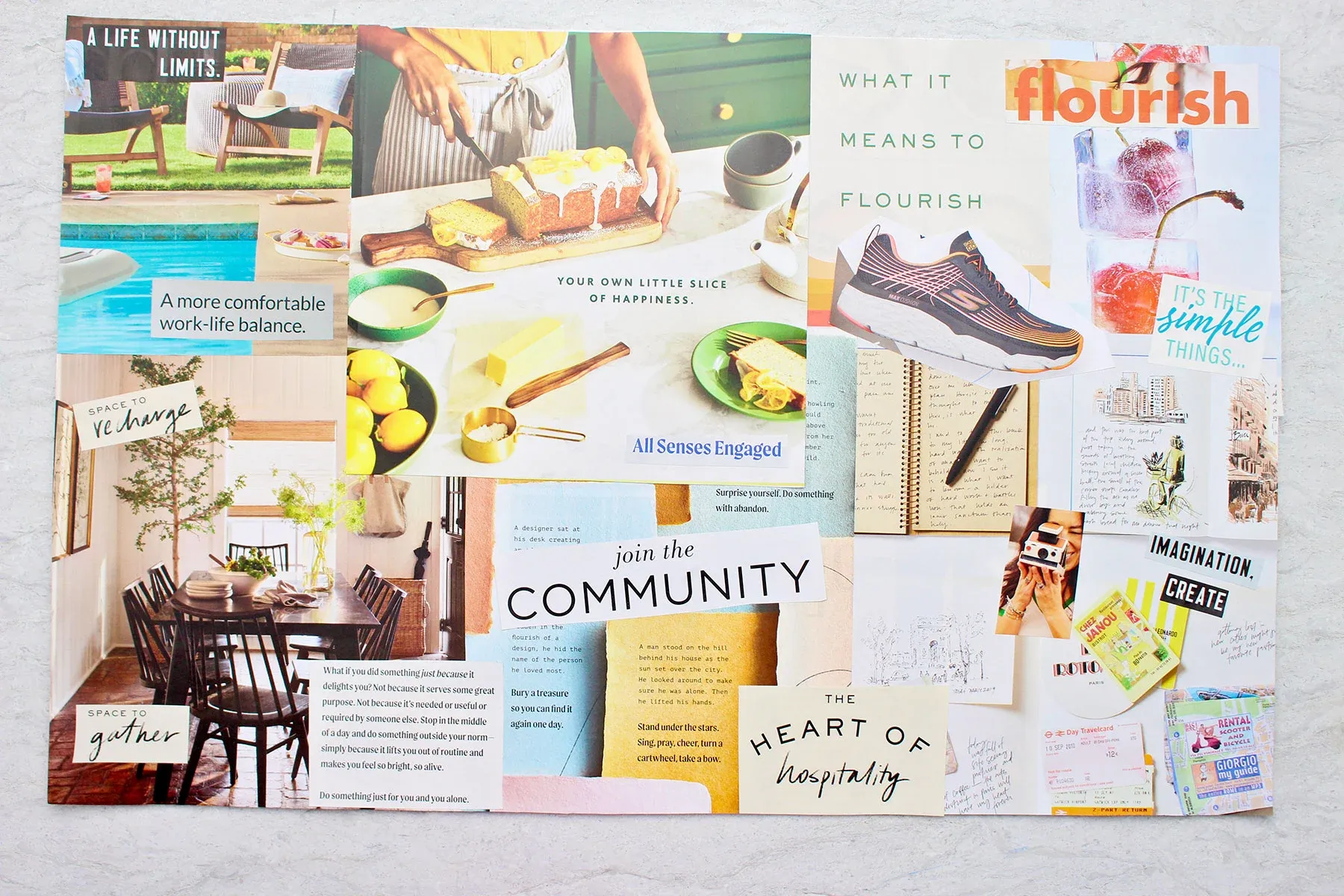
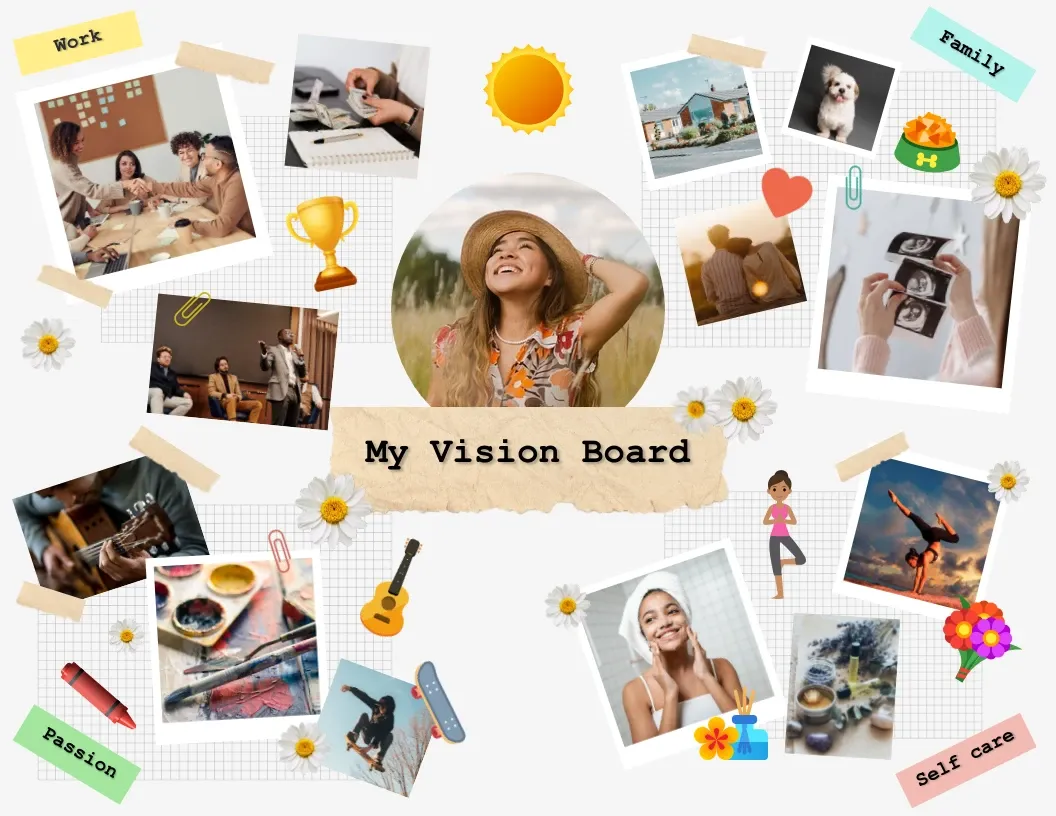
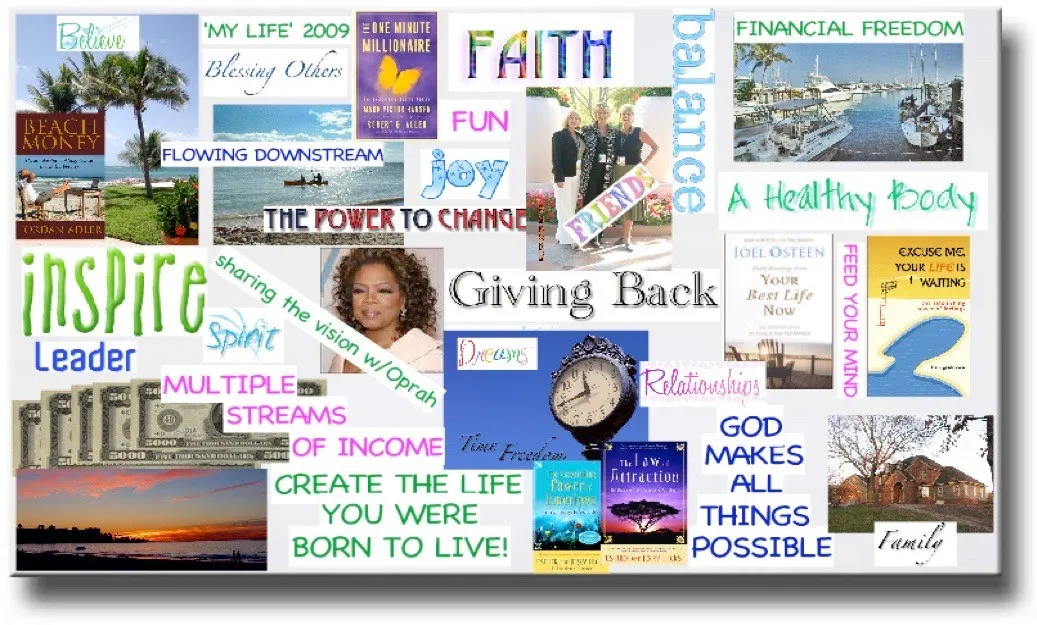
Example Dream Board
A dream board, also called a vision board, is a visual collection of images, words, and symbols that represent your goals and aspirations. By gathering pictures and phrases that reflect what you want to create in your life—whether that's career growth, deeper relationships, better health, or personal fulfillment—you give your mind a clear target to work toward. A dream board works because it transforms abstract goals into something tangible you see daily, making your aspirations feel real and achievable rather than distant wishes.
What a Dream Board Actually Is
At its core, a dream board is a visual representation of your future self and the life you're building. Unlike a to-do list or goal-tracking spreadsheet, a dream board engages your imagination and emotions. It's not about creating a perfect aesthetic Pinterest board (though it can be beautiful). It's about collecting images and words that genuinely resonate with you when you look at them.
A dream board might include magazine cutouts of a place you want to travel, photos of people who embody qualities you admire, words that describe how you want to feel, or images representing accomplishments you're working toward. Some people include affirmations, sketches, fabric swatches, or objects that symbolize something meaningful to them. The medium matters far less than the intention behind it.
Think of it as a conversation between your current self and your future self. You're gathering visual clues about who you're becoming and what you're building, piece by piece.
Why Dream Boards Help You Move Forward
Vision boards aren't magical, but they do something neurologically useful. When you look at images repeatedly, your brain starts noticing opportunities and connections related to those images. This is called the reticular activating system at work. If you have a picture of someone rock climbing on your board, you're more likely to notice a climbing gym opening nearby or a friend mentioning a climbing trip.
Beyond neurology, dream boards work because they create clarity. Many of us have vague wishes—"I want to be happier" or "I want more fulfilling work"—but those stay abstract. When you cut out a specific image or choose exact words, you're forced to get concrete about what you actually want. That specificity is what allows you to take real steps forward.
There's also an emotional piece. Looking at images that inspire you creates a positive feeling. That feeling becomes associated with your goals, making them feel emotionally attainable rather than like obligations. You're not grimly pursuing targets; you're moving toward something that genuinely excites you.
Gathering Materials for Your Dream Board
You don't need much to start. The simplest version requires just a surface and images.
For a physical board, gather:
- A poster board, cardboard, cork board, or foam board (any size works; 18x24 inches is standard but smaller boards are easier to display)
- Magazines, old books, or printed images from the internet
- Scissors or an X-acto knife
- Glue stick or tape
- Markers, colored pencils, or paint pens (optional, for adding words or drawings)
- Optional embellishments: string, stickers, fabric scraps, pressed flowers, or photos
For a digital board, you'll need:
- Pinterest account, Canva, Google Slides, or similar platform
- Images saved to your computer or access to image libraries
- Time to arrange and organize digitally
The best source for images is often magazines you already have or no longer read. Browsing through and tearing out pages that catch your eye is meditative. If you prefer digital, free image sites like Unsplash, Pexels, or your own photo library work beautifully.
Creating Your Dream Board: A Step-by-Step Process
Rather than rushing, treat this as a gentle process. You're not designing a finished product in one afternoon.
Step 1: Clarify what matters right now. Spend 10 minutes reflecting on major life areas: work/career, relationships, health, creativity, adventure, home, learning, or spirituality. Which areas feel most important to focus on? You don't need to address all of them on one board.
Step 2: Gather images without overthinking. Set a timer for 20-30 minutes and flip through magazines or scroll through images. Tear out or save anything that makes you pause—even if you're not sure why. Your gut is picking up on something. Don't filter too much yet.
Step 3: Look at what you've gathered. Lay all the images out. Notice patterns. Do certain colors, styles, or themes repeat? That's information about what resonates with you. Remove anything that doesn't feel right when you see it all together.
Step 4: Add words.** Write or cut out phrases, single words, or questions that capture how you want to feel or what you want to become. Examples: "curious," "grounded," "building something that matters," "showing up for myself," "adventure." These words anchor your board beyond just images.
Step 5: Arrange before you glue. Play with placement. You don't need symmetry. Some people arrange by life area; others arrange by color or by the feeling the collection creates. Move things around until it feels right.
Step 6: Commit to it.** Glue everything down (or save your digital version). You can update it later, but there's something powerful about finishing it and letting it be what it is.
Organizing Your Board by Life Areas
One useful approach is creating different sections of your board for different life areas. This helps you see your goals holistically and make sure you're not overweighting one area while neglecting others.
Career or creative work: Images showing the kind of work you want to do, the environment where you want to work, or symbols of impact you want to have. This might be a photo of a specific type of office, an image representing financial security, or a picture that embodies the energy you want to bring to your work.
Relationships: Images or words reflecting the kind of connections you're cultivating—deeper friendships, more quality time with family, or romantic partnership. This isn't about finding "the one" but about the texture of relationships you want to create.
Health and vitality: Images representing movement you enjoy, foods or meals that nourish you, or how you want to feel in your body. This might include pictures of hiking, yoga, dancing, or simply someone moving with ease.
Learning and growth: Books you want to read, skills you want to develop, or certifications you're pursuing. This section reflects the evolving version of yourself.
Home and belonging: Images of spaces that feel calm or beautiful to you, design elements you love, or feelings of comfort and security. What does home mean to you?
Adventure or experience: Places you want to explore, experiences you want to have, or things on your bucket list. Even if you can't travel immediately, seeing these images keeps the possibility alive.
Physical vs. Digital: Which Approach Suits You
There's no right choice, but different approaches work for different people.
Physical dream boards have a unique power. They take up space in your room. When you see them repeatedly throughout the day—while getting dressed, before bed, while working from your desk—they work on your subconscious. There's also something tactile and grounding about cutting and gluing. Many people find the process itself clarifying and meditative.
The downside is they're not portable, and updating them means starting over or adding new elements on top.
Digital boards are easy to update, can include video or animated elements, and you can set them as phone wallpapers or check them on a private Pinterest board. They're portable if you move. The downside is that a digital board on your phone or computer can get lost among notifications. It requires more intentional viewing.
Some people do both: a physical board in their bedroom or office for daily visual input, and a digital board on their phone for quick inspiration or when they're adding new ideas on the go.
Living With Your Dream Board: Daily Practices
A dream board only works if you actually look at it. Here are ways to keep it alive in your daily life.
The morning look: Take 30 seconds when you wake up or have your coffee to actually look at your board. Don't just glance; pause and let your eye move across it. Notice which images pull your attention that day. Notice how they make you feel.
The intention moment: Before a challenging work meeting or a day where you need courage, look at your board and ask: "Which version of myself does my dream board show?" Carry that feeling into the day.
The reflection pause: Once a week, spend two minutes with your board. Has anything already shifted toward what you see here? What small action could you take this week that moves you closer?
Taking photos: If your board is physical, take a photo of it and set it as your phone background or screensaver. Every time you unlock your phone, you're reminding yourself of what you're building.
Talking about it: Share your board with someone you trust. Explaining what it means to you deepens your connection to it. You might find accountability or support emerges from that conversation.
Evolving Your Dream Board as Life Unfolds
Your dream board isn't permanent. As you grow, achieve goals, or shift what matters to you, your board changes too.
Some goals will come true. When they do, you might take a photo of that section of your board, then replace it with the next iteration of what you're working toward. This is worth celebrating. You're not abandoning the board; you're graduating it.
Other goals might shift because you've learned something about yourself. Maybe you thought you wanted to travel constantly, but you've realized you prefer deeper roots. That's not failure; that's refinement. You're allowed to change your mind about what you want.
A practical approach: revisit your board every 3-6 months. You don't have to remake it, but ask yourself: Does this still feel true? If 80% of it still resonates and 20% has shifted, add new images or replace sections. If your entire life direction has changed, you might create a new board.
There's also something meaningful about keeping old dream boards. Taking them out a year or two later to see what you've already accomplished is profoundly grounding. You'll realize you've achieved more than you remembered, which shifts how you approach new goals.
Real Examples: What Dream Boards Can Look Like
Dream boards look wildly different depending on the person creating them. A few variations:
The minimalist approach: One person might use a small cork board with just five or six carefully chosen images—a photo of a forest (representing peace), a picture of two people laughing together (representing close friendship), an image of someone working at a standing desk (representing a specific career move). Minimal but powerful.
The collage approach: Another person might fill an entire poster board with overlapping images, creating a rich tapestry. Lots of color, texture, and density. When you look at it, it feels energizing and abundant.
The word-focused approach: Someone might use mostly written words, phrases, and handwritten reflections with just a few anchor images. "Brave." "Building something that lasts." "Moving through fear." "Showing up." This appeals to people who think in language.
The photo-based approach: Someone might create a board using primarily personal photos—images of places they've been, people they love, or moments that represent who they're becoming. This grounds the board in their actual life.
FAQ: Common Questions About Dream Boards
Do dream boards actually work, or is this just wishful thinking?
Dream boards don't work like magic spells, but they work psychologically. They clarify your priorities, engage your reticular activating system (making you notice relevant opportunities), and create emotional alignment with your goals. The key is that you still have to take action. A dream board shows the direction; you provide the movement.
What if I don't know what I want to put on my board?
That's normal and okay. Start with how you want to *feel* rather than specific outcomes. Do you want to feel more grounded? More energized? More creative? More connected? Then gather images and words that evoke those feelings. The specific goals will become clearer as you sit with the feeling.
Can I create a dream board for a specific goal, like getting a new job?
Absolutely. You don't need one massive life vision board. You can create focused boards for specific areas—a career board, a health board, a relationship board. Some people create a new board for each major goal they're pursuing.
How big should my dream board be?
Size doesn't matter. A small 8x10 board you keep on your nightstand is just as effective as a large poster board. Choose based on where you'll display it and how often you'll see it. Smaller boards are easier to keep visible.
What if my dream board doesn't inspire me when I first finish it?
Give it a few days. Sometimes boards need time to settle. If after a week it still doesn't feel right, that's information. Maybe you chose images based on what you *thought* you should want rather than what actually excites you. You can always revise it, remove sections, or start fresh. There's no waste in that.
Is there a "right time" to create a dream board?
Any time works. New Year is popular, but so is the start of a new season, after a major life transition, or whenever you realize you need clarity. If you're feeling stuck or uninspired, that's often a great time to create one. You're signaling to yourself that you want something to shift.
Can I share photos of my dream board online?
That's your choice. Some people love sharing for accountability and inspiration. Others prefer keeping it private and sacred. Your dream board is personal—do what feels right. If you share it, know that your board doesn't need to look a certain way or match anyone else's aesthetic.
What do I do with my old dream boards?
Photograph them before taking them down. Revisit the photos occasionally to celebrate what you've already created. Some people keep them in a box. Others display them in order on a wall to see their evolution. There's no rule—store them in whatever way makes you happy.
Stay Inspired
Get a daily dose of positivity delivered to your inbox.