You Must Be the Change You Want to See
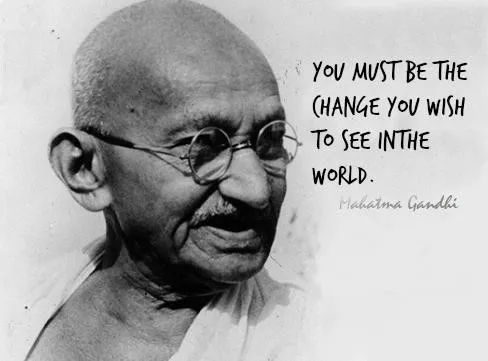
When you feel frustrated by the world around you—whether it's someone's unkindness, a lack of support in your community, or behaviors that conflict with your values—the most powerful response is to become the living example of what you wish you'd see. You must be the change you want to see is not about perfection or single-handedly fixing everything; it's about taking ownership of your own values and letting your consistent actions speak louder than any complaint ever could.
Understanding "You Must Be the Change You Want to See"
This principle, often attributed to Gandhi, doesn't mean you have to carry the weight of the world on your shoulders. What it actually means is straightforward: external change begins with internal commitment. If you want more kindness, you practice kindness. If you want better listening, you become a better listener. If you want a more supportive community, you show up as support.
The logic is simple but transformative. Waiting for others to change while you remain the same is an endless game. The moment you shift your own behavior, you've already changed your situation—at minimum, you've changed your role in it.
This isn't passive. It requires showing up consistently, making small choices that align with your values, and accepting that you can't control how others respond. But what you can control is whether you're living in alignment with what matters to you.
Why This Philosophy Works in Daily Life
People respond to authenticity more than they respond to demands or criticism. When someone genuinely practices what they preach, it creates a quiet permission for others to do the same. You don't need a platform or special authority—just consistency.
Think about the last time someone's actions inspired you more than their words. That's the mechanism at work. Your behavior becomes a blueprint. Someone struggling with self-doubt notices your genuine confidence and feels something shift in themselves. A coworker frustrated with their job sees you approaching your work with care and curiosity, and the energy in the room changes.
This also protects you from resentment. When you're waiting for others to change—your partner, your boss, your family—you're surrendering your peace to their timeline. When you focus on being the change you want to see, you get your power back immediately. You stop being a victim of circumstances and become an active participant in shaping your environment.
How to Identify What Change You Want to Create
Before you can be the change, you need clarity about what change actually matters to you. This requires honest observation.
Start with your frustrations:
- What patterns upset you repeatedly?
- What behavior do you criticize in others?
- What do you wish were different in your relationships or community?
Your complaints are a map. They point directly to your values. If you're frustrated that people don't listen, you value being heard. If you're bothered by superficial interactions, you value depth. If you're upset by broken promises, you value reliability.
Once you've identified the value underneath the complaint, you've found your direction. Now the question becomes: Am I living this value consistently? If not, that's where your change work begins.
Write it down simply:
- What change do you want to see? (Be specific—not "kindness" but "people checking in on those who are struggling")
- Why does this matter to you?
- How does this connect to who you want to be?
This clarity prevents you from chasing vague ideals. You're working with something concrete and personal.
The Foundation: Starting With Your Own Habits
You must be the change you want to see starts with the unglamorous work of examining your own behavior. This is where most people stop. It's easier to imagine change than to make it.
Let's say you want to see more honesty in the world. Before anything else, you need to be ruthlessly honest with yourself and others. Not aggressively—kindly, but truthfully. That means no exaggerations on your resume, no pretending to feel something you don't, no gossiping about someone behind their back.
Or say you want to see more generosity. You can't ask for this while holding back your own resources, time, and attention. You have to start giving—not to impress or to keep score, but because generosity is what you're practicing into existence.
The habit-building approach:
- Name the specific behavior you're committing to (not the vague value, but the daily action)
- Start small—one context, one relationship, or one situation where you practice this consistently
- Track it for two weeks so you notice the pattern forming
- Expect resistance and inner pushback; that's normal
- Gradually expand the behavior to other areas as it becomes natural
Your own habits are the soil where change grows. Everything else builds from here.
Taking Small, Visible Actions
Change becomes real when it's visible to others. Not for performance, but because people learn by watching. Your actions become permission and invitation for others to shift too.
If you want to see more vulnerability and authenticity, you have to share something real about yourself. Maybe it's admitting a mistake at work without defensiveness, or telling a friend about a struggle you're having. Not oversharing, not therapy-dumping, just honest presence.
If you want a more supportive community, you have to show support first. Reach out to someone without an agenda. Ask a thoughtful question. Remember something someone mentioned weeks ago and follow up. Hold space for someone's difficulty without trying to fix it.
If you want to see more positivity and gratitude, you have to name what you appreciate. Write a note. Tell someone why they matter. Notice something good and say it out loud instead of keeping it to yourself.
Examples of visible, small actions:
- You want more intentional conversations: put your phone away and make eye contact when someone talks to you
- You want a more respectful workplace: acknowledge others' contributions, credit ideas properly, listen without interrupting
- You want more environmental care: start composting, reduce your own waste, choose sustainable products
- You want more patience: practice slowing down, breathing before responding, asking clarifying questions instead of assuming
These aren't grand gestures. They're ordinary choices made consistently. That consistency is what creates visible change.
Building Consistency and Patience
The hardest part isn't figuring out what to do. It's doing it long enough to see results, especially when no one's applauding or immediately changing alongside you.
Real change is slow. You might be the only one being kind in a difficult environment for months before you notice anyone softening. You might practice authenticity and vulnerability for years before you find people who reciprocate. The temptation to give up is real.
But consistency is where your actual power lives. One kind act means nothing. Two hundred kind acts, offered without keeping score, reshape the energy of your life and the people in it. This is how culture changes—not overnight, but through individuals choosing differently, repeatedly, until it becomes normal.
How to maintain consistency when it's hard:
- Connect your daily actions to your why—why does this change matter to you personally?
- Find one person or accountability system that keeps you honest
- Celebrate small evidence of change, even in yourself alone
- Remember that consistency is not perfection; it's showing up again after you stumble
- Notice the internal rewards: how does it feel to live in alignment with your values?
The internal reward—the peace of living aligned—is what sustains you when external change is slow.
Navigating Resistance and Doubt
When you start being the change you want to see, expect friction. Some people will be threatened by your shift. Some will test whether you're serious or just performing. Some will have their own reasons for not changing alongside you. You have to be ready for this.
The resistance often shows up in your own mind first. A voice that says: "Why am I the only one trying? This is pointless. No one cares. I'm just making myself look foolish." That voice is probably right that you're the only one trying. That's exactly the point.
You might also encounter guilt about changing without others. "My family hasn't shifted yet." "My workplace is still toxic." "Society hasn't transformed." You don't have to carry the responsibility for others' timelines. Your job is your own practice.
When doubt creeps in:
- Revisit why this change matters to you, not for the world, but for your own integrity
- Notice the subtle shifts already happening—in how you feel, how you relate, who you're attracting
- Remind yourself that you're not responsible for others' choices, only your own
- Find others practicing similar values, even if they're not in your immediate circle
- Expect your resolve to weaken sometimes; that doesn't mean you've failed
Doubt is normal. It doesn't mean you're doing something wrong; it means you're doing something that matters.
The Ripple Effect of Personal Change
Here's what happens when you genuinely become the change: it creates permission and space for others to shift. Not through pressure or judgment, but through quiet example.
A parent who practices calm during chaos doesn't need to lecture their child about emotional regulation. A friend who shows up consistently and listens without judgment shifts how others approach friendship. A leader who admits mistakes and learns from them changes the culture of an entire team. A person who refuses to gossip raises the baseline of what's acceptable in their circle.
The ripple effect isn't guaranteed or instant. But it's real. Change spreads through visibility, consistency, and genuine care—not through force.
You also create ripples internally. Every time you choose alignment over comfort, you're reinforcing your own integrity. You're training yourself to trust yourself. You're becoming someone who can look in the mirror and recognize the values you claim to hold.
That internal shift is often the most important one. Not because the external impact doesn't matter, but because your relationship with yourself transforms first. Then everything else builds from that foundation.
Bringing This Into Your Daily Practice
This isn't a one-time decision. It's a daily practice, more like meditation than a project with a finish line.
Each morning, you get to choose: What change do I want to be today? How do I show up aligned with my values? What would it look like if I were the change, not just wishing for it?
Some days you'll do this beautifully. Some days you'll slip back into old patterns. Both are part of the practice. What matters is the returning—the willingness to try again, to keep choosing alignment, to trust that your consistent practice creates real change, even if you don't see the full picture yet.
This is where positivity deepens. Not toxic positivity that denies difficulty, but the genuine confidence that comes from knowing you're showing up as your best self, regardless of what anyone else is doing. That kind of strength is unshakeable.
Frequently Asked Questions
What if I'm the only one changing? Doesn't that feel pointless?
It can feel pointless for a while. But you're not actually alone—you're changing your own experience immediately, and you're changing how others experience you. Those are two very real changes. Whether others follow is their choice, not your failure.
How do I avoid self-righteousness while being the change I want to see?
Self-righteousness comes when you're doing it to prove something or to judge others. If you're practicing your values to live with integrity, not to be superior, that distinction protects you. Stay curious about why others make different choices instead of assuming they're wrong.
What if the change I want to see seems too big to personally embody?
Break it down to the smallest unit of behavior you can control. You want a more just world? Start by being fair in your daily interactions. You want an end to loneliness? Be the person who reaches out first. Personal change always starts small.
How long does it take before I see results?
This varies wildly. You'll feel the internal shift first—the peace of living aligned. External results can take months or years. Don't use time as an excuse to stop. The goal is consistency, not speed.
What if my change makes people uncomfortable?
Growth often does make others uncomfortable, especially if you're changing in ways that highlight their stagnation. That's not your problem to manage. You can be compassionate, but you're not responsible for others' comfort at the cost of your integrity.
Can I do this alone, or do I need a community?
You can start alone, and you must start alone—your practice is your own. But finding even one or two people aligned with similar values makes consistency easier. Community isn't required, but it's helpful.
What if I fail or slip back into old patterns?
You will. That's not failure; that's being human. The question is whether you return to your practice. Every single time you return, you strengthen your commitment. That repeated returning is what builds real change.
How do I know if this approach is actually working?
Notice how you feel about yourself. Notice small shifts in your relationships and environment. Notice who you're attracting and who you're losing. Notice your own confidence in who you are. These are signs that your practice is working, even if the bigger world hasn't fully transformed yet.
Stay Inspired
Get a daily dose of positivity delivered to your inbox.