Eric Thomas Motivation
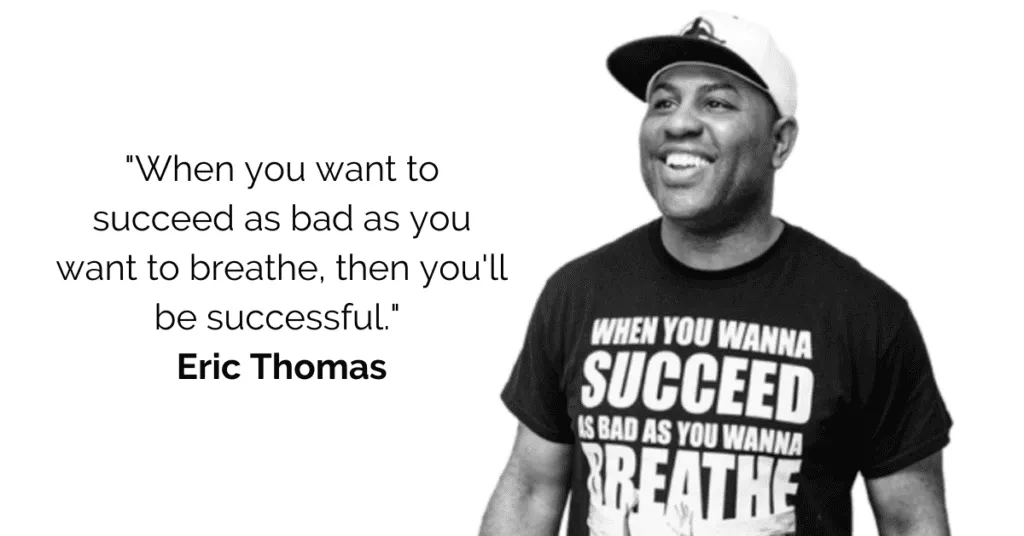
Eric Thomas motivation centers on one radical idea: you have to want success more than you want comfort. His philosophy isn't about positive thinking alone—it's about the deliberate, sometimes uncomfortable work of showing up for yourself, day after day, regardless of how you feel. If you've encountered his viral "want success" speech or his emphasis on personal responsibility, you're touching something real that transforms how millions approach their goals.
Understanding Eric Thomas's Core Philosophy
Eric Thomas built his platform on a principle that contradicts much of mainstream motivation: success requires you to examine why you're really stuck. He doesn't let you off the hook with external blame. Instead, he points directly at personal accountability—not in a shame-based way, but as a liberation.
His framework rests on three interconnected beliefs. First, motivation is temporary but discipline is permanent. Second, your environment and habits shape your identity more than your affirmations do. Third, the gap between where you are and where you want to be is filled only by consistent action, not intention.
What makes this different from other motivational approaches is the lack of false urgency. Eric Thomas doesn't promise 30-day transformations. He talks about the years it takes, the boredom of repetition, and the mental strength required to stay committed when nobody's watching.
The Foundation of Eric Thomas Motivation: Discipline Over Willpower
Most people confuse motivation with willpower, then feel betrayed when their willpower runs out by Tuesday. Eric Thomas motivation, by contrast, starts with building systems so reliable that willpower becomes almost irrelevant.
Discipline is a structure. Willpower is a feeling. You can design your life so that the right choice becomes the easiest choice. This is why he emphasizes controlling your environment—who you spend time with, what you consume, where you work, how your space is organized.
Here's how to build discipline in one area of your life:
- Choose one small habit (drinking water first thing, a 10-minute walk, writing three sentences)
- Make it impossible to forget (water bottle on your pillow, shoes by the door, journal on the kitchen table)
- Do it the same time every day for 21 days without exception
- Only then add a second habit
The pattern matters more than the habit's size. You're not trying to become a new person; you're training yourself to keep promises to yourself.
Overcoming the Internal Resistance: Why You Avoid What You Need
Eric Thomas doesn't shy away from a difficult truth: you often know what you need to do, but you choose not to do it. Not because you're lazy, but because the discomfort of change feels worse than the pain of staying stuck—at least for now.
This is where Eric Thomas motivation diverges from toxic positivity. He acknowledges that growth is uncomfortable. You will feel fear. You will doubt yourself. You will want to quit. Expecting these feelings and planning for them anyway is the real work.
The resistance you feel isn't a sign you're on the wrong path. It's often a sign you're on exactly the right one.
When you feel resistance, pause and ask:
- Am I avoiding this because it's genuinely wrong for me, or because it's hard?
- What specifically makes me uncomfortable about this?
- What would happen if I went through with it anyway?
- Who would I become if I kept this commitment?
These questions shift you from feeling stuck to choosing consciously. That's the power move.
Building Your Foundation: The Non-Negotiables
Eric Thomas circles back repeatedly to foundational practices that have nothing to do with your goal but everything to do with your capacity to achieve it. These are the basics that determine whether you have the mental clarity and physical resilience for the harder work ahead.
Sleep. You cannot think clearly or access your best self running on fumes. This isn't luxury; it's infrastructure. If you're serious about your goals, sleep becomes a non-negotiable.
Movement. Not punishing exercise, but your body needs to be in motion. Walking, stretching, dancing—it doesn't matter. Your mind settles when your body moves.
Solitude. You need time without input, without stimulation, without others' expectations. This is when your brain processes, integrates, and plots the next move.
Honest reflection. Weekly, sit down and ask: Am I making progress? Am I keeping my commitments? Where am I fooling myself? Write it down. Don't judge it; just see it.
If these four are shaky, no amount of goal-setting will work. Build them first. Everything else becomes possible after.
Creating a Morning Routine That Grounds Your Day
Eric Thomas has spoken extensively about how your morning sets the tone for your entire day. You don't wake up motivated; you wake up and create motivation by the choices you make in the first hour.
This doesn't require waking at 5 a.m. (though Eric does). It requires intentionality. Here's a framework:
- No phone for the first 30 minutes. Your attention is the most valuable resource you have. Protect it from notifications, outrage, and comparison.
- Hydration and movement. Drink water. Stretch. Wake your body up deliberately.
- One meaningful task. Not emails, not social media—something that moves toward your actual goal. Write, create, plan, learn. Fifteen minutes minimum.
- Clarity statement. Remind yourself of your purpose. Not in a fluffy way—be specific. "Today I'm building my discipline by finishing the proposal, calling three clients, and reading for 20 minutes."
When you own your morning, the rest of the day becomes yours. You're not reacting to everyone else's urgencies. You're executing your own.
Accountability: The Underrated Power of Being Seen
One of the most practical aspects of Eric Thomas motivation is his emphasis on accountability. You cannot fool yourself as easily when someone else is watching. Not in a punitive way, but as a mirror.
Find one person—not a group, one person—who will tell you the truth. Not someone who'll motivate you with pep talks, but someone who'll ask you directly: Did you do what you said you'd do?
This works because:
- It makes your commitment external, not just internal
- You have to face disappointment immediately, not ignore it
- You build trust with another person through follow-through
- It removes the isolation that often accompanies difficult goals
You can also be your own accountability partner. Keep a simple log. Monday: completed proposal draft, walked 45 minutes, read. Tuesday: completed proposal draft, walked 30 minutes, read. When you see the pattern in writing, you can't hide from yourself.
When Motivation Fades: Staying Committed Through Boring Stretches
Here's what nobody tells you about Eric Thomas motivation: it involves a lot of boring days. Days when nothing feels exciting. Days when you wonder if you're actually making progress. Days when you do the work because it's Tuesday, not because you're fired up.
This is actually where real growth happens. Not in the exciting moments, but in the unremarkable Tuesdays when you show up anyway.
When you lose motivation (and you will), shift your language. Don't ask, "Do I feel like doing this?" Ask, "Is this part of who I'm becoming?" The second question bypasses emotion and points to identity.
You're not doing it because you're motivated. You're doing it because it's who you are now. A person who keeps commitments. A person who does the work. A person who shows up for themselves.
That identity, built one boring day at a time, is more powerful than any moment of inspiration.
Translating Motivation into Measurable Progress
Eric Thomas motivation isn't theoretical. It points toward actual results. But you won't see results unless you're measuring the right things.
Most people measure outcomes too early (sales, followers, promotions) before the foundation is ready. Instead, measure inputs and habits:
- Number of days you kept your morning routine intact
- Hours spent on your core work
- Books read or skills practiced
- Conversations had with people in your field
- Days without compromising on sleep or movement
Track these for 90 days. Outcomes will follow. They always do. But not because of motivation—because of the compound effect of consistent small choices.
Building Community Around Your Growth
A misconception about Eric Thomas motivation is that it's solo—you against the world. Actually, he emphasizes surrounding yourself with people who are serious about their own growth. Not toxic competition, but genuine mutual elevation.
Find your people. They might be online or local. They might be formal (a mastermind group) or casual (friends who text you daily reminders to get back to work). The key is that they're committed to their own growth, and they'll challenge you to be the same.
This isn't for motivation in the emotional sense. It's for clarity. When you're around people doing the work, you can't fool yourself about where you stand. And when you're doing the work, you naturally inspire others.
FAQ: Your Questions About Eric Thomas Motivation Answered
Is Eric Thomas motivation the same as positive thinking?
No. Positive thinking often means denying difficulty or pain. Eric Thomas motivation acknowledges the difficulty fully, then chooses to move through it anyway. It's more honest and, paradoxically, more hopeful because it doesn't depend on your mood.
What if I've failed before? How do I trust myself again?
Start smaller. Not because you're weak, but because you're being strategic. Make a commitment you're 95 percent certain you can keep. Keep it. Repeat. Your trust in yourself builds from kept promises, no matter how small.
Does Eric Thomas motivation work for people with depression or anxiety?
Motivation frameworks aren't substitutes for mental health care. If you're struggling with depression or anxiety, talk to a professional. That said, the discipline-building aspects (sleep, movement, solitude) often help significantly alongside proper support.
How long does it take to see results?
You'll feel different within 3-4 weeks (more clarity, better sleep, less internal conflict). You'll see external results within 90 days if you're consistent. But real transformation, the kind that sticks, takes 2-3 years of this work. That's not discouraging—it's realistic.
What if my goals change?
The framework doesn't change. You still need sleep, movement, solitude, and honest reflection. You still need discipline over willpower. You still need accountability. Build these first, and shifting goals becomes easier because you're not starting from zero.
Can I do this without telling anyone?
Yes. But research suggests you'll persist longer with accountability. Even if you can't find another person, write it down. Track it. Let the numbers be your accountability partner.
What's the biggest mistake people make when trying to apply Eric Thomas motivation?
They try to change everything at once. They wake up inspired and overhaul their entire life. By week two, they're exhausted and quit. Start with one habit. Master it. Add another. Boring, but it works.
How does this connect to being positive or finding joy?
When you keep commitments to yourself, you naturally feel better. Not because you're forcing positivity, but because you're building evidence that you can trust yourself. That evidence is the foundation of genuine confidence and, yes, genuine positivity. The joy comes from the work itself, from becoming who you said you'd be.
The essence of Eric Thomas motivation is simple: you are not waiting for the right moment, the right circumstances, or the right feeling. You are making the decision to do the work now, to keep showing up, and to let that consistency reshape who you are. Start today. Not perfectly—just start.
Stay Inspired
Get a daily dose of positivity delivered to your inbox.