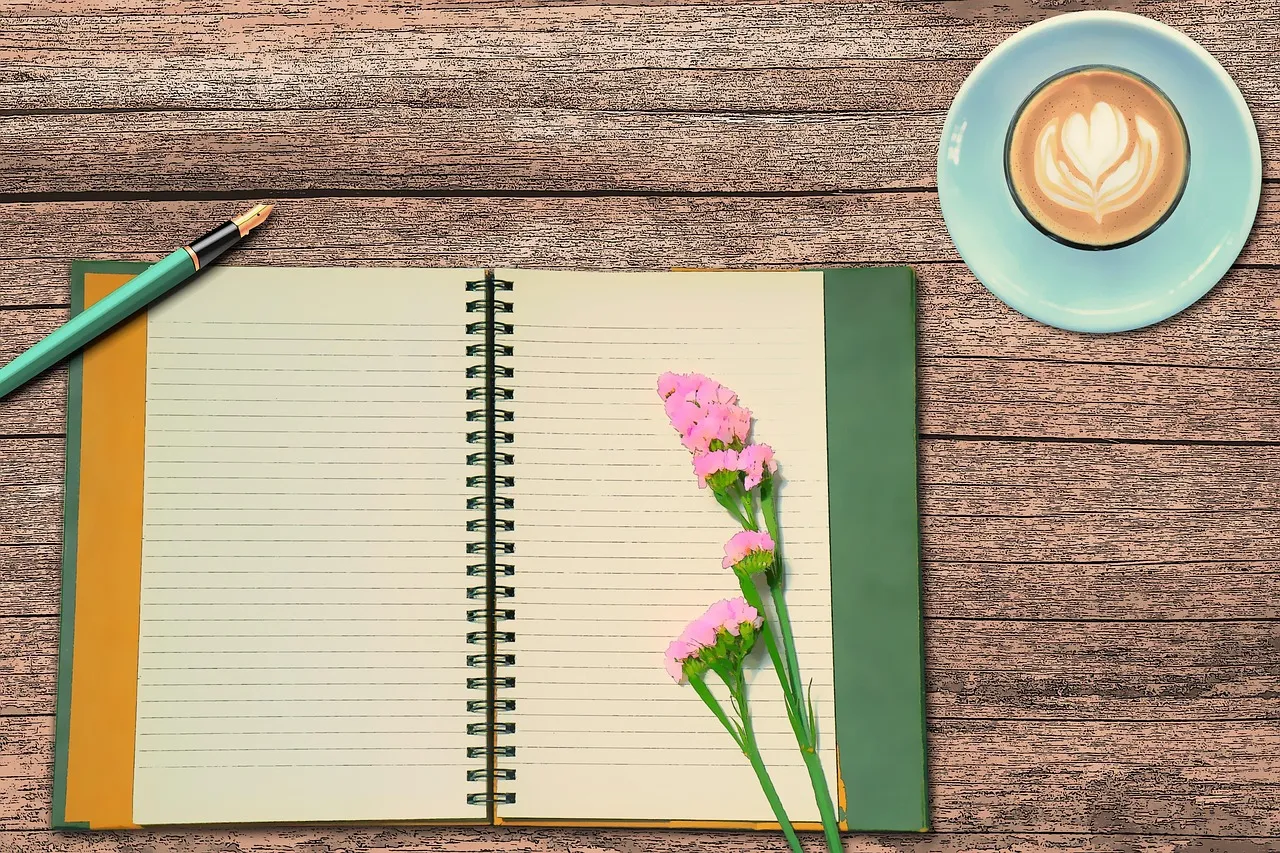
Thankful Journal
A thankful journal is a simple practice where you regularly write down things you're grateful for, no matter how small or ordinary they might seem. This daily habit shifts your attention toward the good already present in your life, creating a foundation for deeper contentment and presence.
Why Keep a Thankful Journal
The act of writing something down changes how your brain processes it. When you move gratitude from a fleeting thought to words on a page, you're creating a deliberate pause in your day. That pause is where the real magic happens.
A thankful journal isn't about forcing positivity or pretending problems don't exist. It's about noticing what you already have—the morning coffee, a conversation with a friend, the way sunlight comes through your window. These moments exist whether we pay attention to them or not.
Writing them down does two things: it anchors those moments in your memory, and it trains your mind to notice more of them tomorrow. You start seeing your day through a different lens—not what's missing, but what's present.
How to Start Your Thankful Journal
You don't need anything special. A notebook and pen work just as well as a digital note app. Some people prefer the tactile experience of handwriting; others like the searchability of digital notes. The format matters far less than consistency.
Here's the simplest way to begin:
- Choose when you'll write. Many people find morning or evening most natural, but any time that fits your schedule works.
- Decide on a number. Some start with three items, others write five or more. There's no minimum or maximum—pick what feels sustainable.
- Write freely. Full sentences, fragments, one word—the format doesn't matter. "Warm blanket. Friend's text. Lunch without rushing" is just as valid as "I'm grateful for the way my friend checked in with me during a difficult time."
- Do it tomorrow too. The second day is slightly harder than the first. The third day is easier. By day seven, it starts feeling natural.
The key to starting isn't choosing the perfect notebook or waiting for the right moment. It's writing something down today, then doing it again tomorrow.
Creating a Thankful Journal Practice That Sticks
Most people start a journal with enthusiasm and abandon it within two weeks. Not because gratitude isn't valuable, but because the practice becomes another obligation.
To make it stick:
- Pair it with something you already do. Write in your journal right after you pour your morning coffee, or just before bed. Attaching it to an existing habit makes it easier to remember.
- Keep it where you'll see it. A journal hidden in a drawer gets forgotten. Keep it on your nightstand or next to where you eat breakfast.
- Don't worry about depth. "Grateful for my dog" counts just as much as a paragraph about your dog's loyal nature. Short entries are better than no entries.
- Release perfectionism. The best gratitude practice is the one you actually do. Messy, hastily written entries beat nothing.
- Let it evolve. Some weeks you might write three items. Other weeks, when you're naturally more reflective, you might write more. Both are fine.
The goal isn't to create a beautiful keepsake (though that can be a nice bonus). The goal is to notice more goodness in your actual life.
Simple Prompts to Guide Your Writing
Some days, you know exactly what to write. Other days, your mind feels blank. Having a few prompts available makes those blank days easier to navigate.
Try these:
- What was one small moment today that made me feel at ease?
- Who did I interact with today, and what did I appreciate about that person?
- What am I taking for granted that I wouldn't want to live without?
- What did my body do for me today that I rarely notice?
- What's something that worked out better than expected?
- When did I feel genuinely present today, even for just a moment?
- What's a small comfort I have access to right now?
- What ability or skill am I grateful to have?
You don't need to use these exact prompts. Create your own based on what matters to you. The prompts are just bridges—they help your mind cross from "I don't know what to write" to "Oh, actually, I can think of something."
Real Examples of Thankful Entries
What does this actually look like? Here are some real entries (shortened for space):
"The way my daughter laughed at her own joke. No one else was listening, but she was completely delighted by it."
"My coworker didn't have to help me debug that code, but she did. Coffee while we figured it out together."
"Quiet morning before everyone woke up. Just me, my tea, and the sound of birds."
"Got that rejection today but my friend called immediately. We didn't even have to talk about it much—she just knew to reach out."
"My knees worked great for the hike. I never had to think about them once."
None of these are profound. They're not about overcoming adversity or achieving something great. They're about noticing what's already here. That's the actual practice.
Making Your Thankful Journal Part of Daily Life
The most useful gratitude practice is one that naturally becomes part of how you move through your day. That means building it into moments you already have—not creating new time you don't have.
Some practical ways to integrate it:
- Morning version: Before checking your phone, write three things. It takes two minutes and starts your day differently.
- Evening wind-down: Make it part of your bedtime routine instead of scrolling. Better for sleep, better for your last thought before closing your eyes.
- Weekly reflection: If daily feels like too much, do it twice a week. The consistency matters more than the frequency.
- Photo-based journaling: Take a picture of something that sparked gratitude, then note it in your journal. Works well if you're visually oriented.
- Voice recording: Some people prefer speaking their gratitude into a voice memo instead of writing. Both activate the same awareness.
- Shared practice: If you live with someone, do it together over breakfast or dinner. Their observations might spark things you hadn't noticed.
The version that works best is the one you'll actually do. Not the one that looks good on Instagram or seems most meaningful in theory—the actual version you'll complete on a Tuesday afternoon when you're tired.
Deepening Your Practice Over Time
After a few weeks of writing basic items, you might naturally start noticing deeper layers. You don't need to force this—it happens on its own when you're paying attention.
Some people find themselves:
- Noticing gratitude for difficult moments (the lesson learned from a mistake, the growth that came from a challenge)
- Recognizing patterns in what brings them alive (certain people, types of activities, times of day)
- Shifting from "grateful for this thing" to "grateful for the capacity to appreciate this thing"
- Finding unexpected connections between entries—how today's small kindness relates to something they wrote about last month
This isn't a requirement. Keeping a thankful journal doesn't need to become a spiritual practice or self-discovery tool unless that's what you want. For many people, it stays exactly what it started as: a simple daily habit that helps them notice good things.
Both versions are valuable.
When It Feels Hard to Be Thankful
There will be days when gratitude feels impossible. Days when you're angry, disappointed, grieving, or just exhausted. On these days, the journal doesn't mean forcing a silver-lining narrative.
You can write about small, physical comforts: "Warm shower. Clean sheets. Water." You can write about things that exist, whether you feel good about them or not: "The fact that I have food to eat. A roof. People who care." You can write about the fact that the bad day will eventually end.
Some of the most powerful gratitude entries come from genuinely difficult moments—not because gratitude solves the difficulty, but because you're naming what's still okay even when things are hard.
On these days, three simple words sometimes matter more than a whole paragraph. The practice itself—the pausing, the noticing, the writing—can be enough.
Your Thankful Journal and Daily Positivity
Keeping a thankful journal doesn't mean your life becomes perfect or that problems disappear. What it does is shift the baseline. You start having a library of small good things you've noticed. On hard days, that library is accessible to you.
More importantly, you start training your mind to spot goodness by default. Not naively, not by denying difficulties, but by actually paying attention to what's working alongside what's not.
This is what daily positivity actually looks like: not constant happiness, but the choice to notice what's here.
Frequently Asked Questions
How long should each entry be?
As long as it takes you to write it. Some days that's one sentence. Other days it's a paragraph. There's no ideal length. The practice is about noticing, not about producing a certain amount of words.
What if I miss a day (or a week)?
Start again the next day. The practice doesn't require perfection or unbroken streaks. Missing days doesn't mean you've failed. It just means you pick up tomorrow.
Is it okay to write the same things repeatedly?
Absolutely. "My morning coffee" can appear in your journal 100 times. Gratitude for the same things over weeks or months is authentic—it means those things genuinely matter to you. You're not forcing novelty; you're noticing consistency.
Should I keep my old entries to re-read them?
Many people find re-reading valuable—especially during difficult periods. But there's no obligation. Some people prefer to let each entry be complete in itself and move forward. Do what feels right to you.
What if I can't think of anything to be grateful for?
Start with the basic biological stuff: "I woke up. I had coffee. My legs carried me somewhere." These aren't profound, but they're real and true. From there, you can build. And if you truly can't think of anything, writing "I have no idea what to write about today" is also an honest entry.
Can I share my journal entries with someone?
Some people do; others prefer to keep it private. There's no rule. If sharing it brings connection and meaning to your life, share it. If you prefer it as a private practice, that's equally valid.
Does timing matter—morning versus evening?
Neither is objectively better. Morning entries help you start the day with awareness. Evening entries let you reflect on what passed. Some people prefer one; others rotate. Choose based on when you'll actually do it consistently.
What if gratitude practice just isn't for me?
It's not required for a meaningful life. Some people genuinely connect with it; others find different practices more resonant—meditation, time in nature, creative expression, service to others. The goal is noticing goodness and building a life aligned with what matters. The thankful journal is just one tool among many.
The one you'll actually use is better than any tool that looks perfect in theory.
Stay Inspired
Get a daily dose of positivity delivered to your inbox.