Sleep Texting
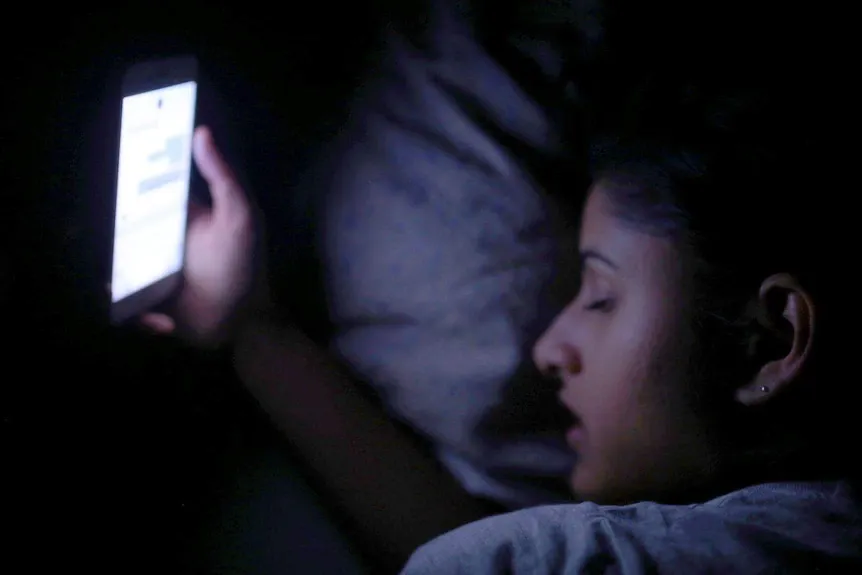
Sleep texting is sending text messages while you're asleep, with no memory of it afterward. It's a parasomnia driven by deeply conditioned phone habits and light sleep stages where motor patterns can fire without conscious awareness. It's more common than most people realize — and almost entirely preventable by changing where and how you keep your phone at night.
Most people have sent a late-night text they vaguely regret. But sleep texting is something different — you send the message entirely asleep, wake up with zero memory of it, and only find out when a confused friend replies asking if you're okay.
It sounds like a punchline. It's actually a documented sleep behavior, and it's becoming more common as smartphones become permanent bedside fixtures. The good news: it's also very fixable, usually without any major lifestyle overhaul.
What Is Sleep Texting, Exactly?
Sleep texting is the act of sending text messages while you're asleep — no conscious awareness, no memory of it afterward. It falls under the umbrella of parasomnias, a category of unwanted behaviors that occur during sleep. The same family includes sleepwalking, sleep talking, and sleep eating.
Unlike sleepwalking (documented for centuries), sleep texting is a thoroughly modern phenomenon. It couldn't exist before smartphones became something most of us sleep within arm's reach of. The combination of deeply conditioned phone habits and a device that's always on, always accessible, and always notifications-ready created something genuinely new.
Most sleep texting happens during light NREM sleep — stages 1 and 2 — when your body is unconscious but your motor system is still partially responsive. A notification buzz, a familiar tactile cue, or even just the momentum of a deeply grooved habit can trigger the whole sequence: pick up phone, unlock screen, open messages, type something. Then put it down and keep sleeping.
Why Your Brain Can Do This While You're Unconscious
Your brain runs a lot on autopilot. Reaching for your phone has become one of the most rehearsed motor sequences in modern life — research suggests the average person checks their phone dozens of times each day. That level of repetition carves deeply grooved habit loops.
During light sleep, the prefrontal cortex — the part responsible for judgment, self-awareness, and decision-making — is largely offline. But the motor cortex and the habit-forming basal ganglia can still fire. This is the same mechanism that allows you to walk to the bathroom in complete darkness without turning on the lights. Your body knows the route. It doesn't need conscious supervision to follow it.
If your phone is within arm's reach, that habit loop can complete itself without you ever surfacing into wakefulness. The sleeping brain picks up the phone, navigates the interface it has tapped thousands of times, and types — even if what it types makes no coherent sense at all.
Blue light exposure before bed compounds this. Using your phone in the 30 to 60 minutes before sleep suppresses melatonin and keeps your brain in shallower sleep architecture. The lighter you sleep, the larger the window for these partial-arousal behaviors.
Who Is Most Likely to Sleep Text
Research on sleep texting skews heavily toward younger people. Studies on college students — published in journals including the Journal of American College Health — have found that a significant portion of participants reported sleep texting, often with no memory of it whatsoever. The pattern makes intuitive sense: younger adults sleep with their phones closer, use them more heavily right before bed, and tend toward more fragmented sleep schedules overall.
Age isn't the only factor, though. You're at higher risk if you:
- Sleep with your phone on the bed or nightstand within easy reach
- Leave notifications turned on overnight
- Habitually check messages the moment you wake up (that reflex bleeds into the hypnagogic twilight between sleep and waking)
- Use your phone heavily throughout the day in ways that make it feel like a natural extension of your hand
- Tend to sleep lightly or wake frequently during the night
Stress also plays a role. When your mind is anticipating replies or staying on low-level alert, sleep architecture gets shallower — creating more opportunity for partial-arousal events like sleep texting.
What Sleep Texts Actually Look Like
If you've received a sleep text, you probably sensed something was off. They tend to share recognizable characteristics:
- Garbled spelling — beyond normal autocorrect chaos, often genuinely scrambled
- Incomplete thoughts — fragments, half-sentences, words that trail off
- Out-of-context references — responding to a conversation from hours or days earlier as if it just happened
- Unusual bluntness or unfiltered intimacy — the social filter is offline; what comes through can be startlingly unguarded
- Single characters, random emoji strings, or apparent gibberish — the movement completed but no coherent content formed
Some sleep texts are coherent enough that the recipient doesn't immediately flag anything wrong. Others are obviously strange. Either way, the sender has no memory of sending them — that's the defining feature of the whole phenomenon.
The Hidden Costs: Social, Privacy, and Relationships
Sleep texting is usually harmless. But it can create real friction worth taking seriously.
The social dimension is the most obvious. Waking up to a sent message that makes no sense — or worse, to a concerned reply from someone who thought you were in distress — is uncomfortable at best and genuinely disruptive at worst.
Privacy is a less-discussed risk. Your sleeping self doesn't apply the same filters as your waking self. People have accidentally sent sensitive information, private thoughts, unfinished drafts, or messages intended for one person to an entirely different thread. If you work in any field where communication discretion matters — or if you simply have conversations you wouldn't want forwarded — this is worth factoring into your bedtime routine.
In relationships, repeated sleep texts can gradually erode trust in the signal of a real message. When a thread occasionally contains entries that look a little off, it becomes harder for people to read your actual intent. A garbled sleep text landing in the middle of a sensitive conversation can create confusion or unintentional conflict that takes real energy to untangle.
None of this is catastrophic. But it's a genuine reason to take the prevention steps below seriously — not just as a sleep hygiene exercise, but as a care-for-your-relationships exercise.
How to Know If You're Doing It
Most people find out because someone else tells them. But there are signs to look for on your own:
- Messages in your sent folder you have no memory of writing
- Confused or concerned replies to texts you didn't consciously send
- Your phone found unlocked in the morning, or in a different spot than where you left it
- A partner or housemate mentions hearing you use your phone at night
If you use an iPhone, Screen Time logs app usage by the hour — check whether your messaging apps show activity at 2 or 3am on nights you know you were asleep. Android's Digital Wellbeing feature offers similar data. The timestamps don't lie, and seeing the pattern clearly is often enough motivation to actually change the habit.
6 Steps to Stop Sleep Texting
- Charge your phone outside the bedroom. This is the single highest-impact change available to you. If the phone isn't physically reachable, the habit loop cannot complete itself. A basic alarm clock costs very little and eliminates the most common reason people keep their phone bedside in the first place. This one change resolves the issue for most people.
- Schedule Do Not Disturb to activate automatically every night. Both iOS and Android allow you to set DND on a timer — pick your usual bedtime and let the system handle it so it's never a willpower decision. You can whitelist specific contacts for genuine emergencies. Fewer pings and buzzes mean fewer potential triggers during light sleep.
- Switch to a PIN or pattern lock. Muscle memory can navigate Face ID and fingerprint sensors without meaningful cognitive involvement. A PIN requires active recall — enough friction to interrupt the automatic sequence and give your brain a chance to surface before anything gets sent.
- Build a 30-minute phone-free wind-down before bed. This shapes your whole sleep architecture, not just sleep texting prevention. Reading, light stretching, a warm shower, or even just sitting without a screen shifts your brain toward deeper sleep. Over time it also retrains the association between your bed and your phone — weakening the habit loop at its root.
- Audit and cut your notifications. Most people could disable the majority of their app alerts without meaningfully missing anything that couldn't wait until morning. Open your settings and turn off every notification that doesn't genuinely need real-time delivery. Fewer interruptions during the night directly reduce the triggers available to a sleeping brain.
- Tell someone you trust. If you share space with a partner, family member, or roommate, let them know this is something you're working on. Ask them to gently rouse you if they hear you using your phone at night. External accountability is surprisingly effective — and it opens the conversation so nobody is confused or alarmed if they receive a strange 3am text.
When It's Worth Mentioning to a Doctor
Sleep texting on its own isn't cause for alarm. But if it's part of a broader pattern — you're waking frequently throughout the night, feeling genuinely unrefreshed most mornings, or noticing other unusual behaviors during sleep that you or a partner have observed — that's worth mentioning to a general practitioner.
Parasomnias tend to cluster and are more frequent when overall sleep quality is poor. A doctor can help identify whether something else is contributing to fragmented sleep and suggest appropriate next steps — which, for most people, involves lifestyle adjustments rather than anything clinical.
Think of sleep texting as a signal worth listening to, not a diagnosis to worry about.
The Bigger Picture: Your Phone-Sleep Boundary
Sleep texting is a symptom of something larger — the near-total collapse of the boundary between waking life and rest. When your phone is the last thing you touch before sleep and the first thing you reach for in the morning, it starts to find its way into the space in between.
The habits that prevent sleep texting are the same habits that genuinely improve sleep depth, morning clarity, and the quality of attention you bring to your relationships. A phone-free bedroom doesn't feel like deprivation after the first week. Most people who make the switch report sleeping more soundly, waking more easily, and feeling less reactive through the day — not because they've sacrificed something, but because they've reclaimed something.
Your messages will still be there in the morning. So will the people who matter.
Frequently Asked Questions
- Is sleep texting dangerous?
- For most people, no. The primary risks are social embarrassment and unintended privacy slips rather than physical harm. If it's happening alongside broader sleep disruption, that's worth addressing — but sleep texting alone is benign.
- Do people ever remember sleep texting?
- Almost never. No conscious memory is the defining characteristic. Most people only learn it happened when they find a sent message they don't recognize or receive a confused reply the next day.
- What actually triggers sleep texting?
- A combination of deeply conditioned phone habits and a phone within physical reach during light sleep. A notification buzz can be a trigger, but it's not always necessary — the habit loop can fire without any external prompt.
- Is sleep texting a sign of a sleep disorder?
- Not necessarily. It's a parasomnia, but it's common enough among frequent phone users that it doesn't on its own indicate anything more serious. If other disruptive sleep behaviors are also occurring, a conversation with a doctor is worthwhile.
- Can sleep texts sound coherent?
- Sometimes, yes. How coherent they are depends on how light the sleep stage is and how well-rehearsed the conversational context was. Some read as slightly off; others are completely garbled. The sender has no memory of either.
- How common is sleep texting?
- More common than most people assume. Research on college-aged populations has found that a substantial proportion have experienced it. As phone dependency increases across age groups, the behavior appears to be becoming more widespread.
- Does sleep texting mean I'm not sleeping deeply enough?
- Often, yes — it suggests you're spending more time in light sleep stages where partial-arousal behaviors can occur. Deep sleep involves more complete motor suppression. Better sleep habits (phone-free wind-down, consistent schedule) tend to improve sleep depth and reduce these events.
- Can kids and teenagers sleep text?
- Yes, and research suggests they may actually be at higher risk given heavier phone use, phones kept closer at night, and less established boundaries around screens and sleep. It's a practical reason to create phone-free bedroom habits early.
- What should I do if I receive a sleep text from someone?
- Don't panic. A simple, kind reply — "Hey, I think you might have sent this while asleep?" — is usually the right move. Most people are more embarrassed than anything else when they find out. No drama required.
- Will putting my phone on silent stop sleep texting?
- It helps by reducing external triggers, but it doesn't eliminate the risk — sleep texting can happen without any notification prompt. Charging your phone in another room entirely is more reliable.
- Can sleep texting happen on apps other than SMS?
- Yes. WhatsApp, Instagram DMs, email — any app you use frequently enough to develop strong muscle memory for it can become a vehicle for sleep-based activity. The behavior follows the habit, not the platform.
- Can certain medications contribute to sleep texting?
- Some sedative-hypnotic sleep medications have been associated with complex sleep behaviors in some people. If you're on a prescribed sleep medication and noticing unusual night behaviors, that's a conversation worth having with your prescribing doctor.
Sources & Further Reading
- Murdock, K. K. (2013). Texting while sleeping: A study of college students. Journal of American College Health.
- American Academy of Sleep Medicine. Sleep Education: Parasomnias. sleepeducation.org
- Sleep Foundation. Parasomnias and Sleep Behavior Disorders. sleepfoundation.org
- Harvard Medical School Division of Sleep Medicine. Sleep and Health Education Program. healthysleep.med.harvard.edu
- Mayo Clinic. Sleep disorders: Overview and when to seek help. mayoclinic.org
Reviewed by The Positivity.org Editorial Team · Last updated April 16, 2026
Stay Inspired
Get a daily dose of positivity delivered to your inbox.