Ikigai: Find Your Purpose & Meaning in Life
What is Ikigai? Understanding Japan's Secret to Purpose
Ikigai is a Japanese concept that translates to "reason for being" or "that which makes life worth living." This profound philosophy combines two Japanese words: "iki" (life) and "gai" (worth or value). Unlike Western approaches to success that often focus solely on career achievements or financial wealth, ikigai offers a more holistic path to meaning and fulfillment.
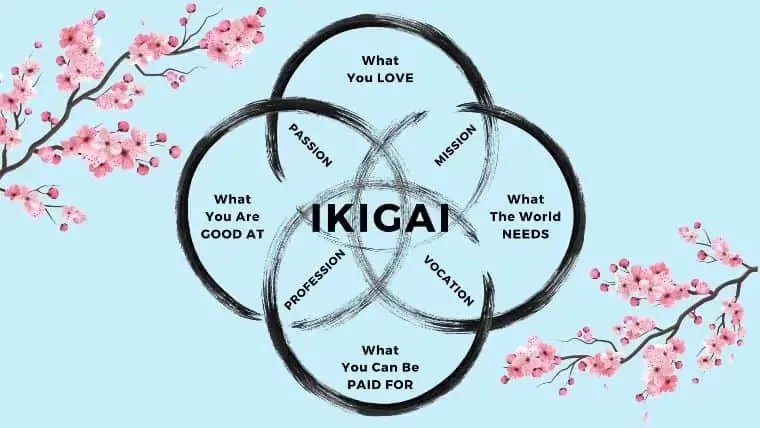
The beauty of ikigai lies in its simplicity and depth. It's not about achieving one grand goal, but rather discovering the intersection where your passions, talents, values, and the world's needs converge. When you find your ikigai, you experience a sense of contentment that transcends temporary happiness or external validation.
The concept has gained global recognition in recent years, particularly through the longevity research of Blue Zones—regions where people live exceptionally long, healthy lives. In Okinawa, Japan, where many residents live past 100, ikigai is woven into the fabric of daily life, suggesting that having a strong sense of purpose directly contributes to both wellbeing and longevity.
- Ikigai bridges personal passion with meaningful contribution to others
- It encompasses what you love, what you're good at, what the world needs, and what pays you
- This Japanese philosophy has been linked to increased happiness and lifespan
- Finding your ikigai is a personal journey, not a destination
- It applies to all life areas—career, relationships, hobbies, and personal growth
The Four Elements: The Foundation of Ikigai
At its core, ikigai consists of four essential elements that, when balanced, create a life of purpose and fulfillment. Understanding each component helps you evaluate your current life and identify where adjustments might lead to greater satisfaction.
What You Love (Your Passion)
The first element focuses on activities and pursuits that ignite your enthusiasm. These are the things you could do for hours without watching the clock, activities that energize rather than drain you. Your passion might be creative expression, helping others, building things, or exploring ideas.
Your passions aren't necessarily career-based. They might be hobbies, volunteer work, relationships, or personal projects that bring you joy and sense of aliveness. The key is identifying what genuinely excites you, not what you think should excite you.
- Reflect on activities where you lose track of time
- Notice what topics you naturally gravitate toward in conversation
- Consider childhood interests that still resonate with you today
- Pay attention to what makes you feel most energized and alive
- Explore new interests to expand your understanding of your passions
What You're Good At (Your Talent)
The second element examines your natural abilities and developed skills. These are competencies you've cultivated through education, experience, and practice. Your talents might be technical skills, interpersonal abilities, creative talents, or strategic thinking.
This dimension of ikigai isn't about being perfect or the best. It's about recognizing where you have genuine capability and can deliver value. Skills can be developed over time, and often our talents emerge through pursuing our passions persistently.
- Document skills you've developed throughout your education and career
- Ask trusted friends and colleagues what strengths they see in you
- Identify where people consistently ask for your help or expertise
- Consider abilities you've honed through hobbies and personal projects
- Recognize both hard skills and soft skills like communication and empathy
What the World Needs (Your Contribution)
The third element shifts focus outward to societal and community needs. This is about understanding how your talents and passions can serve others and make a meaningful contribution. The world's needs might include solving environmental problems, supporting vulnerable populations, creating art, building technology, or providing care.
This component prevents ikigai from becoming self-centered. It acknowledges that true fulfillment comes not just from personal satisfaction, but from knowing your life matters to others. When you address genuine needs, you experience a deeper sense of purpose and connection.
- Identify problems or issues you feel passionate about solving
- Research communities or causes that align with your values
- Consider how your unique skills could address underserved needs
- Explore both local and global opportunities to contribute
- Notice what injustices or challenges move you to action
What You Can Be Rewarded For (Your Sustainability)
The fourth element addresses the practical reality that you need to sustain yourself. This might be financial compensation, recognition, resources, or other forms of value exchange. While capitalism and personal security aren't inherently wrong, this element ensures your ikigai is sustainable for the long term.
Many people struggle with this dimension because they've been taught that doing what you love means sacrificing financial security. However, finding where your talents meet market demand allows you to build a sustainable life. Your ikigai might involve a paying job, freelance work, business ownership, or other income-generating activities that don't contradict your deeper purpose.
- Research market demand for skills in fields you're passionate about
- Explore different career paths that align with your talents and values
- Consider how you might monetize your passion without compromising integrity
- Evaluate both current opportunities and future growth potential
- Recognize that financial sustainability supports long-term contribution
Finding Your Personal Ikigai: A Practical Guide
Discovering your ikigai is a reflective process that requires honest self-examination and willingness to experiment. There's no single formula because each person's intersection of passion, talent, contribution, and sustainability looks different. Here's how to begin your journey.
Start with Self-Reflection
Begin by journaling about each of the four elements separately. Write about what brings you joy, what skills you've developed, what problems in the world matter to you, and what forms of sustainability align with your values. Don't censor yourself or worry about whether answers seem practical initially.
Spend time with these questions over weeks or months. Patterns will emerge. You might notice that seemingly unrelated passions share a common theme, or that your talents could serve causes you care deeply about. This reflection phase builds self-awareness essential for identifying your ikigai.
- Journal regularly about each of the four elements without judgment
- Review past achievements and experiences for hidden themes
- Consider how your values have evolved throughout your life
- Explore moments when you felt most fulfilled and why
- Allow your understanding to evolve as you gain new experiences
Experiment and Explore
Your ikigai likely won't reveal itself through thought alone. You need to test hypotheses through action. Take classes, volunteer, start side projects, have conversations with people doing work that interests you. Each experiment provides data about what genuinely resonates with you versus what sounds good in theory.
This experimental phase is particularly important for people early in their careers or transitioning to new life chapters. You might discover that a passion you thought you'd lost is still vital, or that a new interest was waiting to be discovered. Testing prevents the trap of choosing an ikigai based on assumptions rather than lived experience.
- Volunteer in fields related to your interests
- Take short courses or workshops to test new skills
- Conduct informational interviews with people in relevant fields
- Start small projects aligned with potential ikigai
- Gather feedback from mentors and trusted advisors
Accept Evolution
Your ikigai is not fixed. As you grow, change, and gain new experiences, your understanding of purpose will evolve. The passions that drove you at twenty might shift at forty, and that's not failure—it's growth. Your ikigai should be revisited periodically to ensure it still resonates with who you're becoming.
Many people feel trapped by earlier versions of their ikigai because they believe changing course means they were wrong. Instead, evolution suggests you're learning and developing. The beauty of this concept is that it accommodates growth and change while maintaining connection to purpose.
- Schedule regular reviews of your ikigai—annually or when life shifts occur
- Give yourself permission to evolve and adjust your direction
- Recognize that different life chapters may emphasize different elements
- Maintain flexibility while staying grounded in core values
- Share your journey with others who support your growth
Living Your Ikigai in Daily Life
Understanding your ikigai intellectually differs from embodying it daily. This is where intention, habit, and small choices converge to create a meaningful life. Living your ikigai doesn't require abandoning your current life; it means gradually aligning your daily actions with your deeper purpose.
Align Your Work
Whether you're employed, self-employed, or transitioning careers, look for ways to bring your ikigai into your work life. If you can't change your primary job immediately, explore whether elements of your role can be reframed to align with your purpose. You might also develop side projects or volunteer work that directly express your ikigai while your career evolves.
Some people discover their ikigai directly aligns with their career, while others find their career provides resources for their ikigai elsewhere. Neither approach is wrong. The key is conscious intention rather than unconscious acceptance of misalignment.
- Evaluate how your current work relates to your ikigai elements
- Identify specific tasks that align with your passion and purpose
- Look for opportunities to reframe your role toward greater meaning
- Plan incremental career moves toward deeper alignment
- Create projects outside work that directly express your ikigai
Integrate Your Passions
Make time for activities that represent your passion element of ikigai. This might mean dedicating hours weekly to creative pursuits, setting aside time for learning, or engaging in volunteer work. When your passions are relegated to rare vacations or someday dreams, you miss the daily nourishment they provide.
Even small consistent practices build over time. An hour weekly on what you love has profound cumulative effects on your wellbeing, creativity, and sense of purpose. This consistency signals to yourself that your ikigai matters.
- Schedule regular time for passion projects—weekly or daily
- Create environments that support your interests and skills
- Connect with communities centered on what you care about
- Share your pursuits with others who appreciate them
- Track progress and celebrate growth in areas you're developing
Serve Your Community
The contribution element of ikigai thrives through action. Find regular ways to serve communities or causes aligned with your values. This might be volunteering, mentoring, activism, creative contribution, or professional work that addresses real needs. Service deepens your sense of purpose and connection.
Even modest contributions matter. If your ikigai involves creative expression, sharing your work serves. If it involves teaching, mentoring one person makes a difference. If it involves problem-solving, contributing solutions within your sphere of influence counts. Your ikigai doesn't require global impact to be meaningful.
- Identify specific needs you can realistically address in your community
- Find volunteer opportunities aligned with your talents and passions
- Mentor others in areas where you have expertise
- Use your skills to solve problems that matter to you
- Track the impact of your contributions and adjustments needed
Overcoming Challenges on Your Ikigai Journey
The path to discovering and living your ikigai isn't always straightforward. Common obstacles can derail even well-intentioned seekers. Understanding these challenges helps you navigate them with resilience and clarity.
The Pressure to Choose Perfectly
Many people delay pursuing their ikigai because they're searching for the perfect answer. They believe that until they've identified the exact intersection of passion, talent, contribution, and reward, they shouldn't move forward. This perfectionism becomes paralysis.
Your ikigai doesn't need to be perfect; it needs to be authentic and actionable. Start with your best current understanding, take action, and refine as you learn. The journey toward ikigai is more important than the moment of complete clarity, which may never fully arrive.
- Embrace "good enough" understanding to overcome analysis paralysis
- Accept that your ikigai will refine through action, not just reflection
- Allow uncertainty and complexity rather than forcing clarity
- Recognize that many elements of ikigai develop through pursuing them
- Give yourself permission to course-correct as you gain experience
Financial Constraints and Practical Limitations
Real financial obligations and practical constraints are legitimate challenges. Not everyone has the flexibility to immediately redesign their life around ikigai. Responsibilities to family, health needs, economic realities—these matter and shouldn't be minimized.
The solution is integration rather than transformation. If your dream career requires retraining, develop a realistic timeline and take incremental steps. If your passion can't currently pay bills, build it as a foundation for future transition. If caregiving obligations limit your time, find small ways to honor your ikigai within constraints.
- Create a realistic timeline for transitioning toward your ikigai
- Develop your ikigai components sequentially rather than all at once
- Find ways to honor your purpose within current constraints
- Build skills and networks gradually while meeting present obligations
- Seek mentorship from others who navigated similar constraints
Social and Family Expectations
Others' expectations about your career, lifestyle, and choices can conflict with your ikigai. Family might want you in stable, prestigious careers. Society might expect particular paths. Friends might judge your choices. These pressures can overshadow your own sense of purpose.
Navigating ikigai sometimes means respectfully declining others' expectations. This doesn't mean complete disregard for legitimate relationships and responsibilities, but rather honest conversation about your values. Often, people respect authentic purpose more than we expect, and those who don't might be less important guides than we assumed.
- Clearly articulate your ikigai to important relationships
- Listen to concerns while maintaining your sense of purpose
- Find mentors and communities that support your choices
- Make peace with others' potential disappointment
- Focus on people who celebrate your authentic path
Key Takeaways
- Ikigai is the Japanese concept of finding your reason for being by balancing what you love, what you're good at, what the world needs, and what sustains you financially.
- The four elements of ikigai work together—your purpose emerges from the intersection of passion, talent, contribution, and sustainability, not from any single element alone.
- Finding your ikigai is a journey of self-reflection and experimentation—it requires journaling, testing hypotheses through action, and permission to evolve as you grow and learn.
- Living your ikigai means integrating it into daily life through aligned work, dedicated time for passions, and genuine service to your community and causes you care about.
- Overcoming challenges requires realistic expectations and self-compassion—embrace "good enough" understanding, work within practical constraints, and stay true to your authentic purpose even when facing others' expectations.
Stay Inspired
Get a daily dose of positivity delivered to your inbox.