Healing Energy Meditation Guide: Step-by-Step Practice
Healing energy meditation is a grounded practice that helps you move stagnant emotions, release tension stored in your body, and reconnect with a sense of calm. This guide offers a complete 20-30 minute meditation you can follow step by step, whether you're new to meditation or returning after time away. The practice works by combining gentle breath awareness with intentional body scanning and visualization, creating conditions for both mental clarity and physical ease.
What You'll Need
This meditation requires very little, but a few basics help:
- A quiet space — somewhere you won't be interrupted for 20-30 minutes. Even a bedroom with the door closed works well.
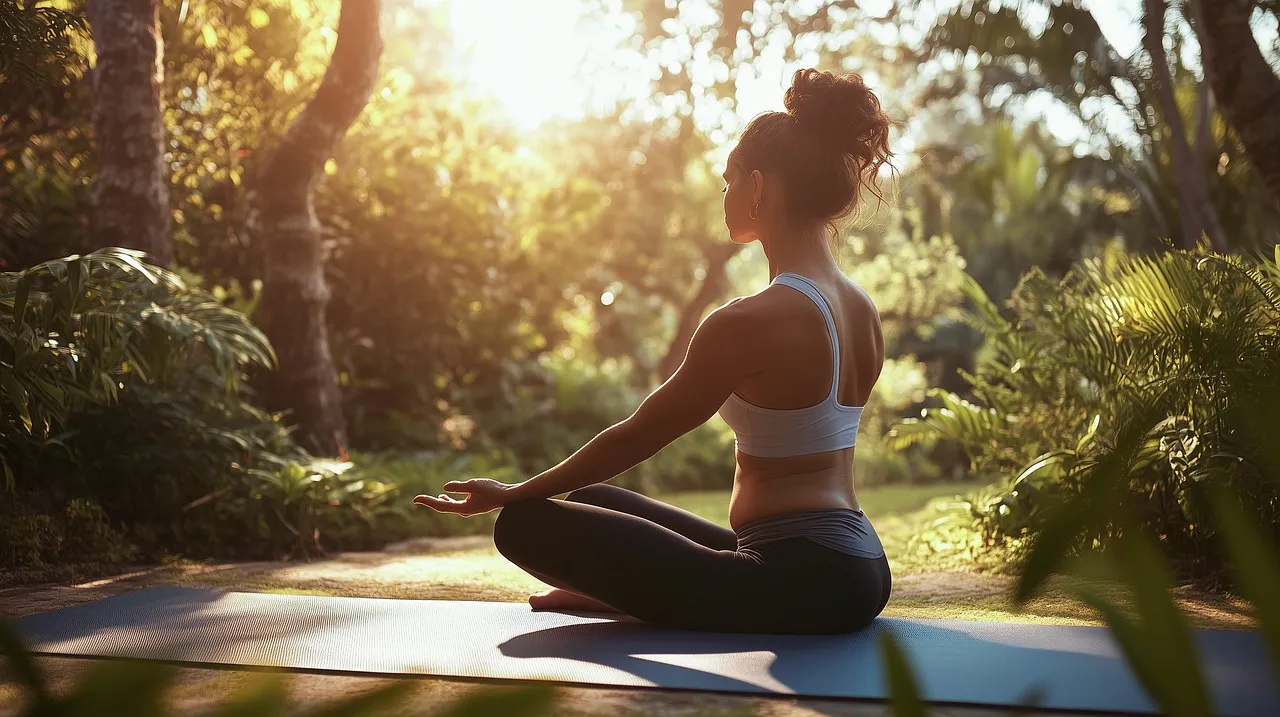
- A comfortable position — you can sit cross-legged on a cushion, in a chair with feet flat, or lie on your back on a yoga mat or carpet. Avoid lying on a bed, which often triggers sleep.
- Optional props — a meditation cushion, yoga mat, or folded blanket under your sitting bones helps align your spine without strain. A light blanket nearby is useful if you cool down during the practice.
- Phone on silent — or leave it in another room entirely.
- Timing — early morning or evening works best, at least an hour after eating a heavy meal.
The Practice: A Step-by-Step Meditation
Move through each step at your own pace. You can read through the whole practice first, record yourself reading it aloud, or simply reference one step at a time. The entire practice takes about 25 minutes if you linger in the deeper sections.
Step 1: Settle Into Your Seat
Sit upright with your spine naturally aligned. Your shoulders should be relaxed, not hunched or pulled back. If sitting, rest your hands on your thighs with palms facing up or down, whichever feels more open. Spend 30 seconds simply arriving — notice the weight of your body, the temperature of the air, any sounds around you without judgment. You're not trying to change anything yet; just observing.
Step 2: Establish Your Baseline Breath
Breathe naturally through your nose, with your mouth gently closed. Don't force or deepen your breath. Simply notice: Does your breath move into your belly or your chest? Is it smooth or slightly jagged? Does one nostril feel more open than the other? Spend 1-2 minutes just watching your breath, like you're observing a familiar friend without needing to comment.
Step 3: Lengthen Your Exhale
On your next inhale, breathe in for a count of 4. On the exhale, stretch the breath to a count of 6. Keep this rhythm for 8-10 breaths. The longer exhale signals your nervous system that it's safe to rest. You'll notice your shoulders dropping, your jaw softening. If the counts feel off, adjust to 3 and 5, or 5 and 7 — what matters is that your exhale is slightly longer than your inhale.
Step 4: Scan From Crown to Toes
Now bring awareness to the top of your head. Without trying to change anything, notice: Is there tightness? Heaviness? Openness? Slowly move your attention down through your face, jaw, throat, shoulders, and arms, spending 5-10 seconds at each region. When you reach your hands, notice whether they feel tense or relaxed. Continue down your chest, belly, lower back, hips, thighs, calves, and finally to the soles of your feet. This typically takes 3-4 minutes. You're simply gathering information about where your body holds tension.
Step 5: Activate Your Healing Intention
Choose one area where you felt tightness or heaviness — perhaps your chest, shoulders, or belly. This is where you'll direct healing energy. Silently say to yourself: "I'm breathing awareness and ease into this space." Breathe into that region for 5-8 breaths, imagining your breath as a warm, gentle light. Don't force visualization; if you see colors or light, great. If you just feel warmth or a sense of opening, that's equally valid.
Step 6: Expand From the Center Outward
On your next exhale, imagine that healing warmth expanding slightly beyond the area you've been focused on. It might move across your shoulders, down your arms, or into your belly. With each exhale, it spreads a little further. This isn't about fixing anything; it's about allowing ease to ripple through your body organically. Spend 3-4 minutes with this visualization, following the energy as it moves at its own pace.
Step 7: Meet Any Resistance With Curiosity
You may notice that the energy or warmth meets a "wall" — a place where tension is stronger or your mind feels skeptical. This is normal. Instead of pushing through, pause and breathe with that resistance. Mentally ask it: "What are you protecting me from?" Often, tight shoulders are protecting vulnerability; a tight chest may be guarding grief. You don't need to solve this now. Simply acknowledge it and continue breathing. Over weeks, this curious, gentle approach loosens what forcing never could.
Step 8: Return to Whole-Body Awareness
Zoom out from the specific area and bring your awareness back to your entire body as one integrated whole. Imagine a soft, healing light moving through every cell — not blindingly bright, but the gentle glow of early morning. Your whole body is receiving this ease simultaneously. Spend 4-5 minutes here, breathing naturally and resting in the sense of wholeness. This is the heart of the practice.
Step 9: Affirm Your Capacity to Heal
Silently repeat one of these phrases that resonates with you, once or twice per exhale: "My body knows how to heal," "I am safe to release what no longer serves me," or "I trust my body's wisdom." Choose words that feel true to you, not ones that sound nice but feel hollow. The repetition anchors your meditation in the body rather than staying abstract.
Step 10: Begin the Return
Gradually start to deepen your breath. As you inhale, imagine drawing energy up from the earth through your feet. As you exhale, feel yourself grounding more solidly into your seat. This phase takes 2-3 minutes. You're not abruptly yanking your awareness out of meditation; you're gently preparing to re-engage with the external world.
Step 11: Notice the Shift
Start to notice subtle sensations: the texture of your clothing, the air on your skin, any sounds you can hear. Flex your fingers and toes gently. Notice if your body feels different than when you started — perhaps more spacious, calmer, or simply more present. Don't judge or expect specific results; simply observe what's actually here.
Step 12: Close and Integrate
Before opening your eyes, set a simple intention for the next few hours: "I carry this sense of ease with me," or "I move through my day with presence." Then slowly open your eyes, blink several times, and sit for another 30 seconds before standing. You're more sensitive to stimuli right now, so move slowly and avoid immediately checking your phone.
Tips for Beginners
Your mind will wander constantly — that's not failure.
Meditation isn't about blank-mind bliss; it's about noticing when your mind has wandered and gently returning your attention. You might return to your breath 50 times in a 20-minute session. That's 50 moments of choosing presence. That's the practice.
You may feel restless or emotional.
As you relax, emotions sometimes surface — frustration, sadness, or even unexplained tears. This isn't a sign you're doing it wrong. Your nervous system is unwinding stored responses. If emotion becomes overwhelming, slow your breathing, open your eyes, and rest. You can return another day.
Physical discomfort is information, not punishment.
If your legs fall asleep or your back aches, adjust your position. Meditation is not about suffering through discomfort to earn results. A chair is better than a cushion if a chair lets you sit comfortably for 20 minutes. Props, blankets, and proper alignment matter.
Consistency matters more than duration.
Ten minutes of daily practice builds more resilience than a once-weekly 30-minute session. If you can only commit to five minutes some days, that's still valuable. The goal is to train your nervous system, and that happens through repetition, not length.
What the Evidence Suggests
Research in neuroscience and medicine suggests that meditation practices like this one can reduce activity in the amygdala (your brain's alarm center), lower cortisol levels, and improve heart rate variability — a marker of nervous system balance. People who practice energy-focused meditation regularly report decreased chronic pain, better sleep, and greater emotional regulation. The mechanisms likely involve both the neurological effects of focused attention and the physiological effects of controlled breathing. You don't need to believe in "energy" spiritually for this to work; the body's own capacity to regulate and heal through calm awareness is science enough.
Frequently Asked Questions
How often should I practice this meditation?
Aim for at least three to four times per week to notice changes in your baseline stress level. Daily practice, even for 10-15 minutes, accelerates results. Listen to your body — if you feel resistant, take a break, but try to maintain consistency rather than sporadic long sessions.
Can I do this lying down?
You can, but sitting is generally preferable because it helps you stay alert without drifting to sleep. If lying down is necessary for physical reasons, try a yoga bolster under your knees and a pillow under your head to keep your spine aligned.
What if I fall asleep during the meditation?
It's okay occasionally, but consistent sleepiness suggests you need more rest overall or should practice at a different time of day. If you're very tired, a 10-minute walk before meditating can help. Also check that you're not meditating too close to bedtime.
Do I need to believe in chakras or energy for this to work?
No. This meditation works through breath regulation and attention — both well-established tools for calming your nervous system. You can frame it entirely in physiological terms and still get the benefits. The "energy" is simply a useful metaphor for how attention and breath move through your body.
What should I do if I get stuck on a particular step?
Skip it and move forward. If body scanning feels impossible, focus purely on breathing instead. If visualization doesn't come naturally, focus on the physical sensations of warmth or expansion. There's no "right" way to feel during meditation. Honor your own experience and build from there.
Stay Inspired
Get a daily dose of positivity delivered to your inbox.